Mohenjo-daro
Harappa and Lothal
The same forms appear at other cities of the same civilisation, which is what makes it a shared convention rather than a local habit.
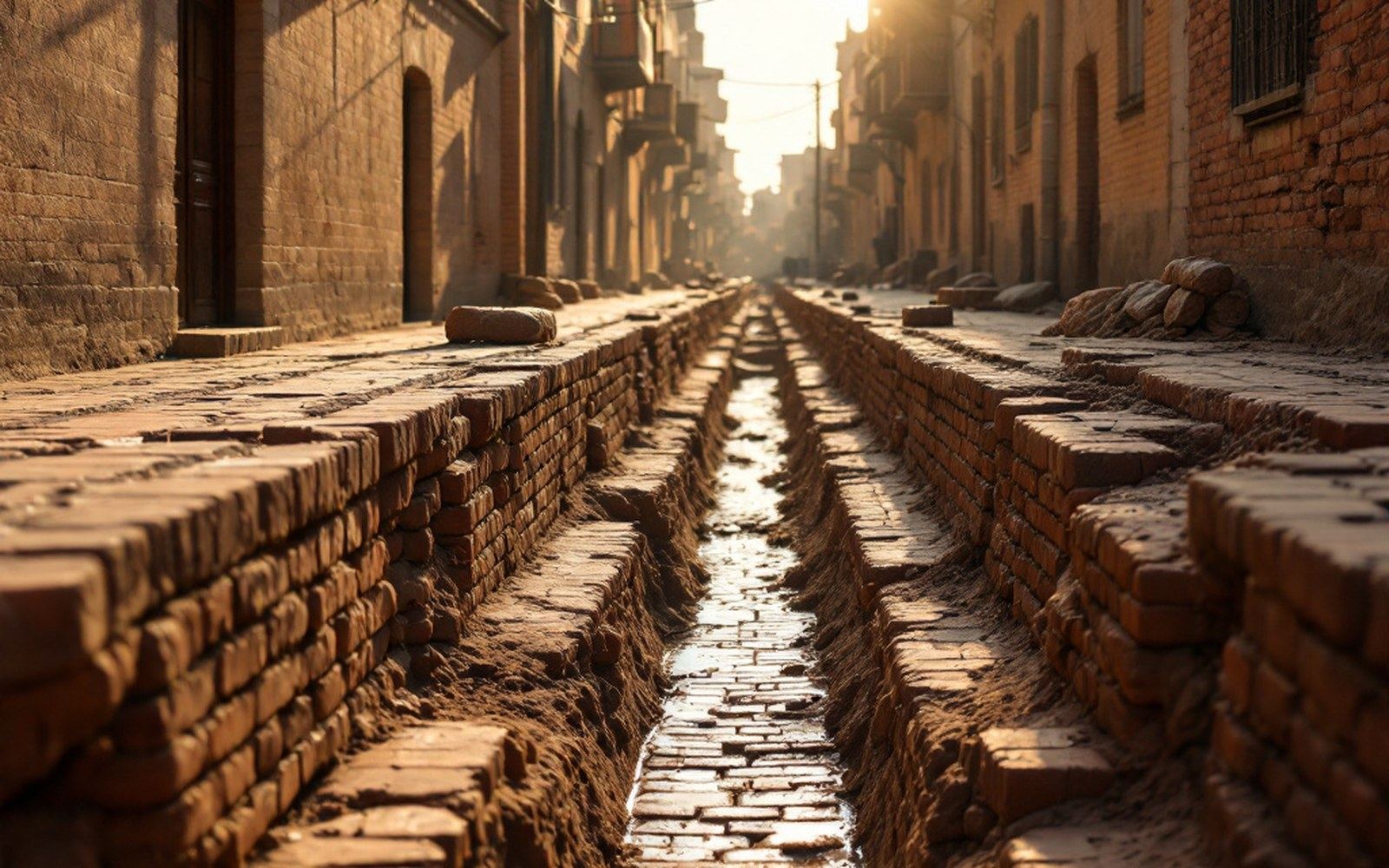
The same forms appear at other cities of the same civilisation, which is what makes it a shared convention rather than a local habit.
A convention, not a coincidence
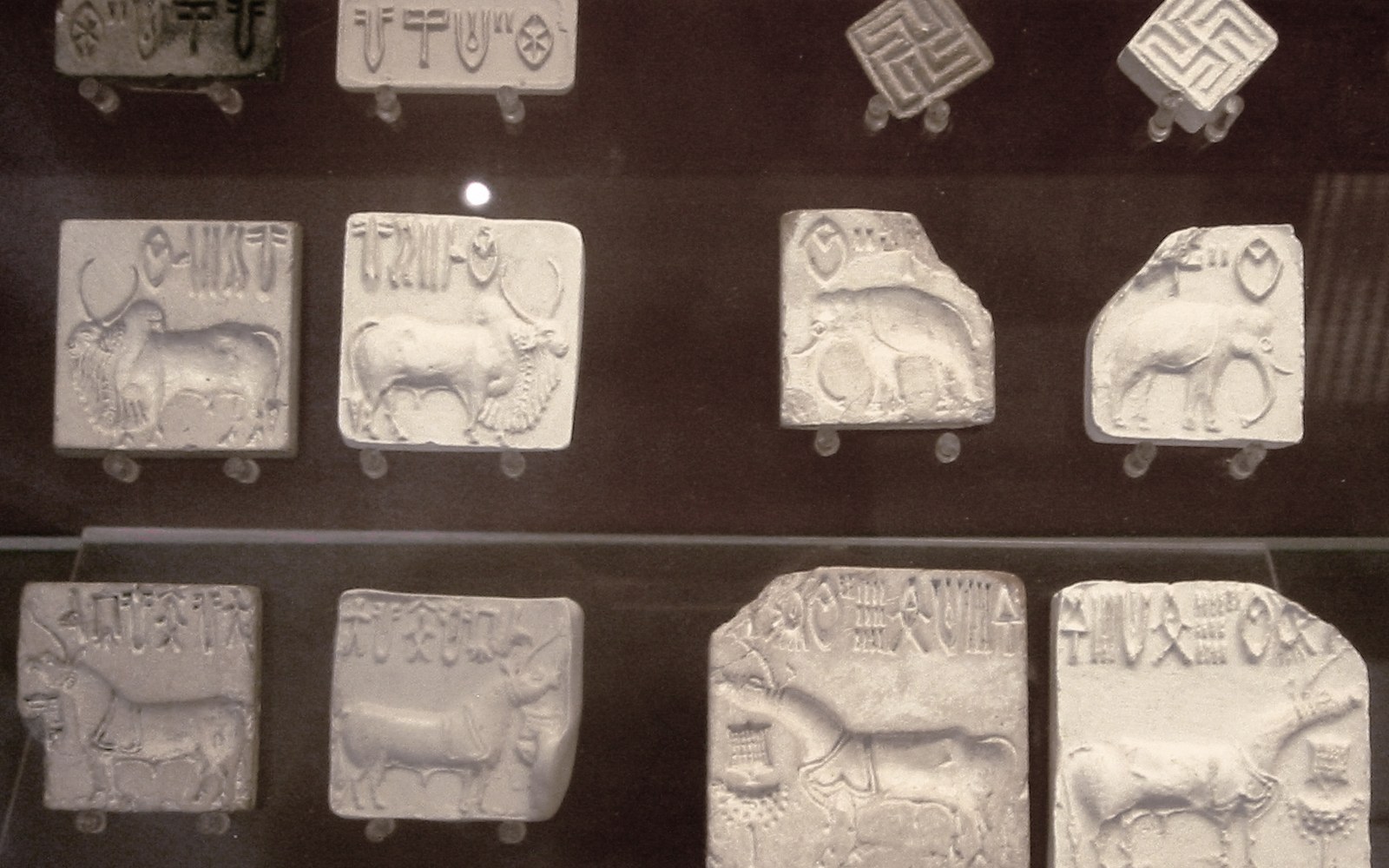
When John Marshall's team first recovered incised seals from Mohenjo-daro in the early 1920s, the figure appeared there as if it were a local curiosity. Then the same form turned up at Harappa, some six hundred kilometres to the north in Punjab, on steatite — the soft stone carved and fired to a white hardness — worked in the same manner and carrying the same proportions.
Not a rough approximation: the same figure, rendered with the same discipline. That repetition changed what the object meant to scholarship. A mark found at one site is a find; the same mark found at two sites separated by hundreds of kilometres is evidence of a shared convention.
Lothal, the Indus port city excavated in Gujarat from the 1950s onwards by the Archaeological Survey of India, extended the argument further still. Lothal lies at the southern reach of the civilisation's range, closer to the sea than to the great river cities of the north. Its economy was oriented toward the Persian Gulf trade.
Its bead-workers and seal-cutters were operating in a craft environment shaped by exchange with distant markets. And yet the figure appears there too, on seals and on small fired objects, in a form consistent with what Harappa and Mohenjo-daro had already produced. The geographic spread — Punjab to Gujarat, riverine heartland to coastal port — rules out independent local invention. It points instead to a shared visual vocabulary moving with the civilisation itself.
What the distribution tells us

The Indus script has not been deciphered, so the precise meaning the mark held for the people who cut it remains out of reach. What the distribution does establish is that the figure belonged to the common repertoire of Indus seal-cutters across more than a millennium of urban life, roughly the third and early second millennia BCE.
Aurel Stein, whose surveys of the northwestern borderlands in the early twentieth century added comparative context to Marshall's urban excavations, observed that the same basic forms recurred wherever the civilisation's material culture reached. The figure was not marginal. It appeared on objects that carried the most controlled and legible marking in the entire Indus graphic system: the stamp seals used, most scholars believe, in administration and trade.
At Harappa, as at Mohenjo-daro, the seals were cut from steatite, a material chosen because it is soft enough to engrave cleanly and hardens when fired. The resulting impression is precise and repeatable — qualities that matter if you are marking goods or authorising transactions across a network of cities. That the figure appears within this administrative register, rather than only on household objects or casual marks, suggests it carried recognized weight.
Whether that weight was apotropaic, proprietary, or symbolic in some other sense, the evidence does not yet say. Ernest Mackay, who led later excavations at Mohenjo-daro after Marshall, catalogued multiple seal types carrying the figure and noted their distribution across different stratigraphic levels — meaning the form persisted across time, not only across space.
Lothal's role is particularly instructive because its connections extended beyond the Indus heartland. Trade goods from Lothal reached Mesopotamia, and seals of Persian Gulf type have been found there in return. That the figure survived intact in this outward-facing city, rather than being displaced or modified by external influences, suggests it was not merely decorative. It was specific enough to be maintained.
Taken together, Harappa, Lothal, and Mohenjo-daro demonstrate that what the seal-cutters of the Indus civilisation produced was a shared symbolic system with genuine geographic coherence. The figure was one term in that system — recognisable, consistent, and deliberately reproduced across the full extent of one of the ancient world's largest urban networks.