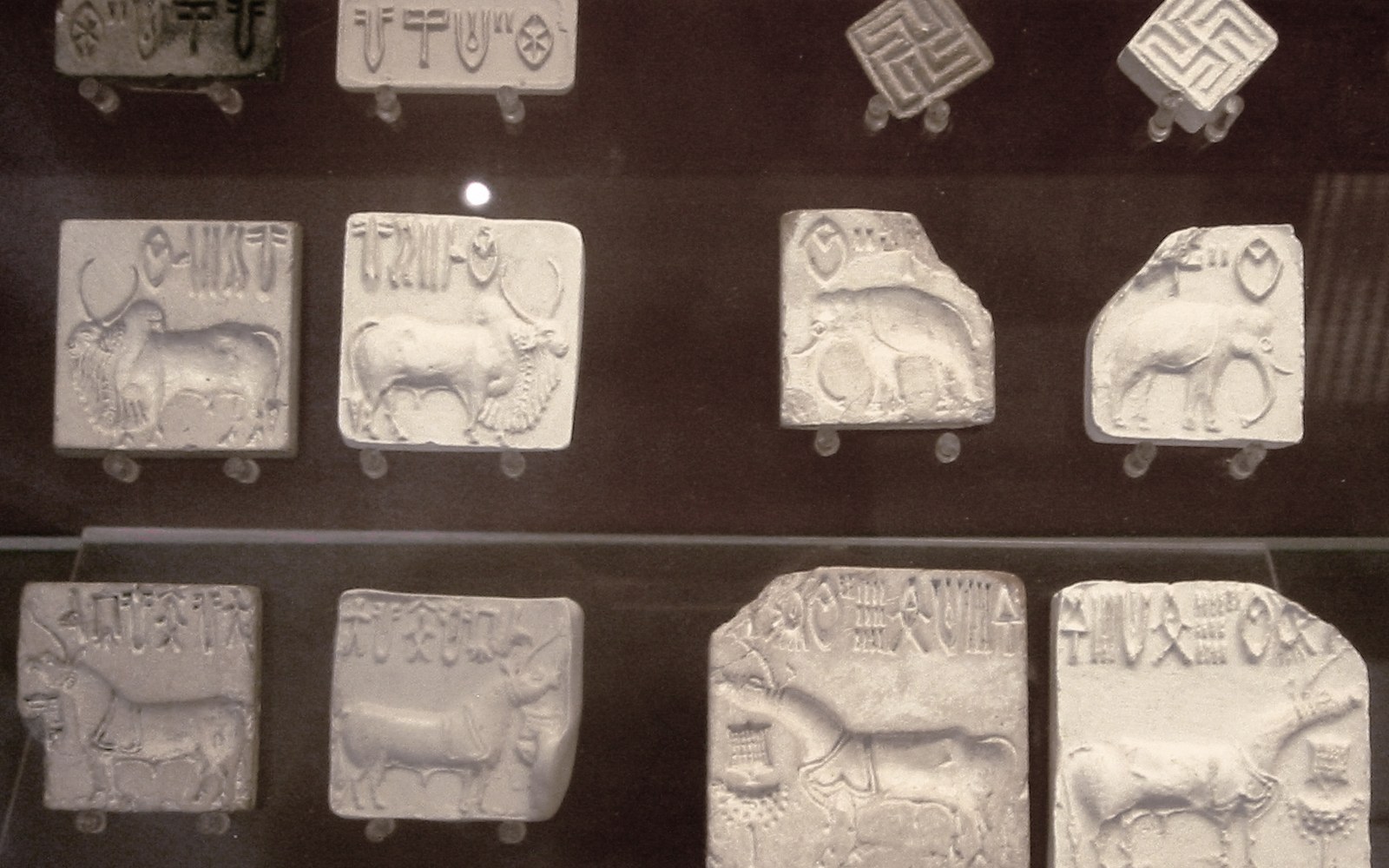
Mohenjo-daro
Steatite, and how it was cut
Soft stone carved and then fired to harden, which is why the seals survive and why the lines are so fine.
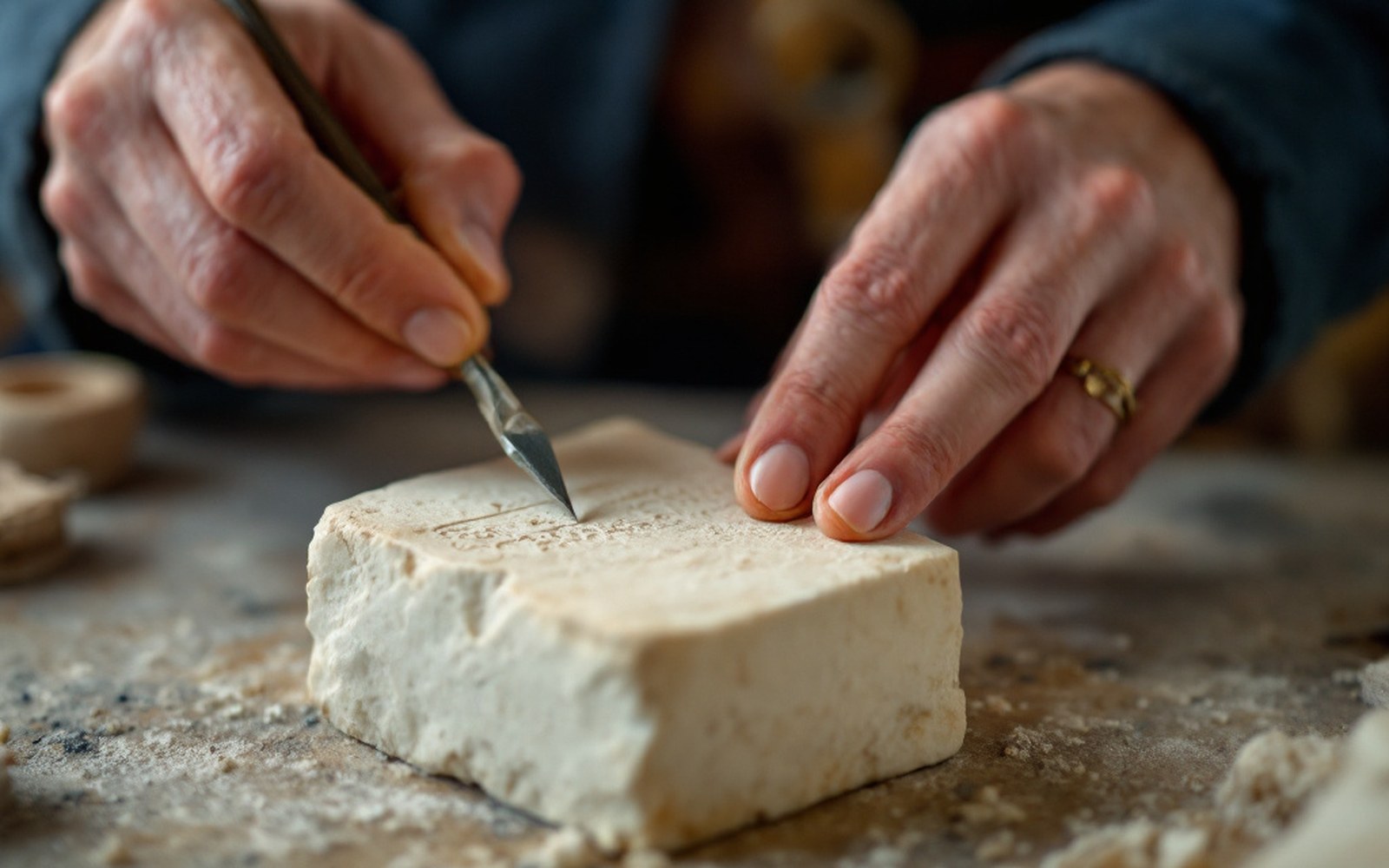
Soft stone carved and then fired to harden, which is why the seals survive and why the lines are so fine.
The stone that let the craftsman be precise
Steatite — soapstone — is soft enough to carve with a copper tool. That softness is the reason the Indus seal-cutters chose it, and the reason the marks on those seals, recovered at Mohenjo-daro in the 1920s and early 1930s under the direction of John Marshall and Ernest Mackay, are so clean and so legible after four millennia.
The craftsman began with a flat tablet of raw steatite, typically a few centimetres square. Because the stone yields easily, a skilled hand could cut lines of consistent depth and a sharp, unbroken profile — the kind of precision that a harder stone would have demanded metal burins and far longer labour to achieve. The shallow relief of the pictograms, the animal figures, the script signs, and the geometric devices among them were all worked before firing. At that stage the tablet was still pale grey and relatively fragile.
Firing transformed it. Heated in a kiln to temperatures that vitrified the surface, the steatite turned white or cream and became considerably harder than it began, resistant to the abrasion it would face from repeated pressing into clay.
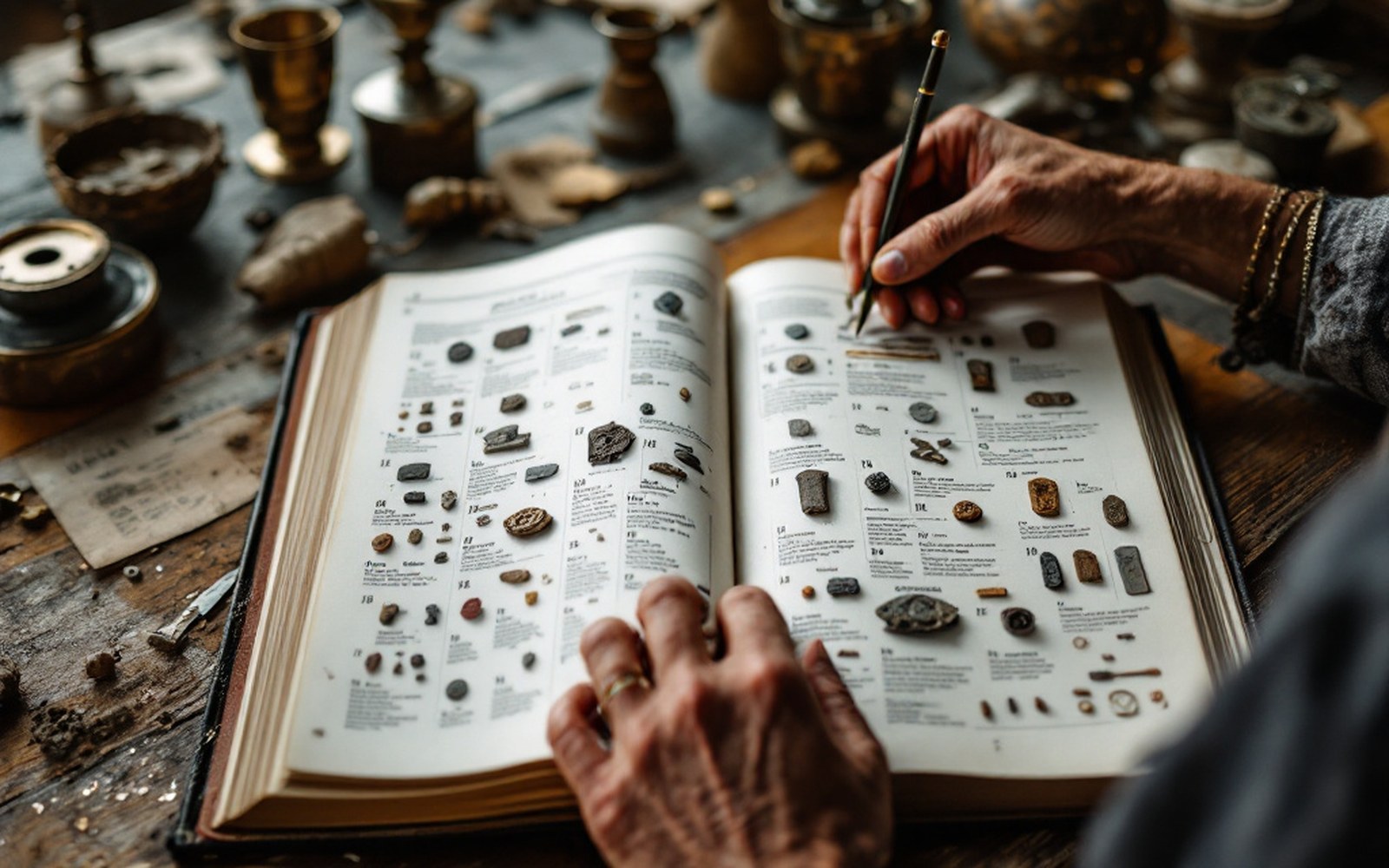
The Archaeological Survey of India's excavation reports record fragments of kiln debris alongside seal blanks at both Mohenjo-daro and Harappa, confirming that production happened on site rather than at a distant workshop. The fired surface also took a glaze or slip in some examples, adding a glossy finish that would have made the impression crisper still.
What survives, then, is the product of a two-stage technology: carve soft, fire hard. The sequence meant that fine internal angles — the kind that appear inside the hooked arms of geometric devices — could be undercut with relative ease before the stone stiffened, and would hold their edge afterward. A mark pressed into wet clay picked up those angles faithfully.
The Ashmolean Museum and the British Museum both hold excavated Indus seals where the fired surface is intact and the lines remain sharp enough to read the incised script without magnification. The material record is, in that sense, self-documenting: steatite fired well, cut cleanly, and lasted — which is precisely why the evidence exists at all.