Mohenjo-daro
Mohenjo-daro, 1922
The seals came out of a city that had been under a mound for four thousand years, and they carry the figure among their commonest motifs.
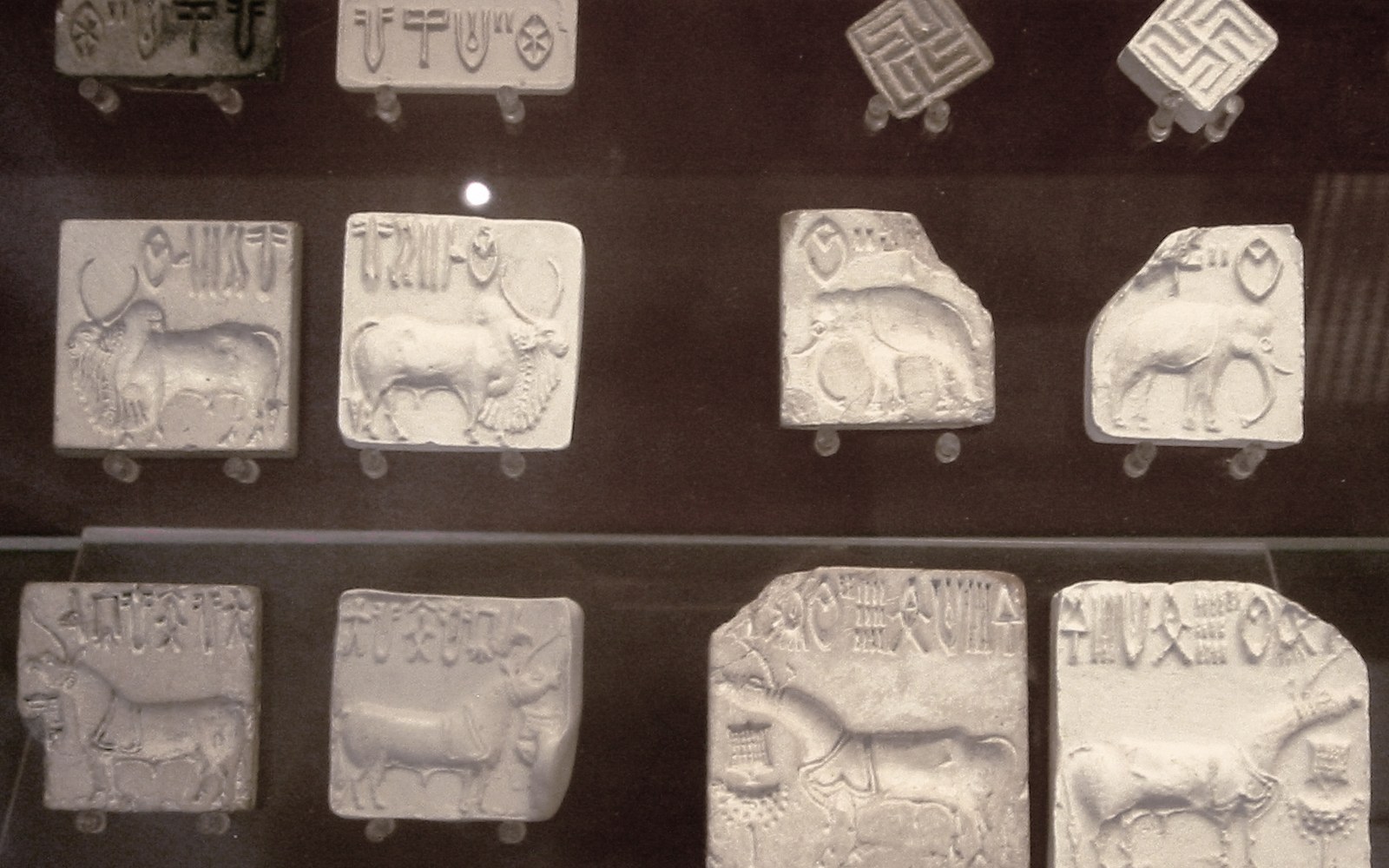
The seals came out of a city that had been under a mound for four thousand years, and they carry the figure among their commonest motifs.
A city returned to view
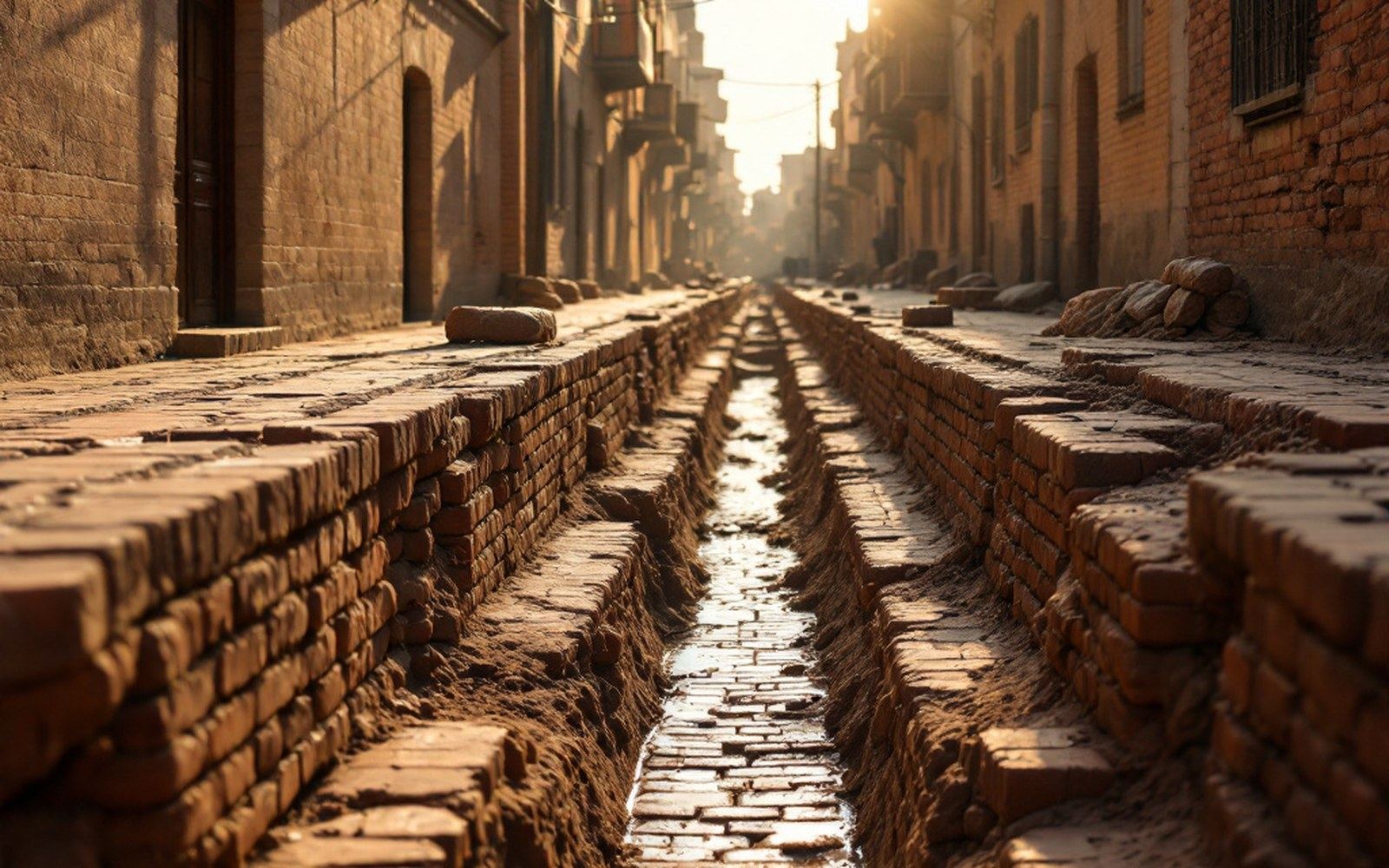
The mound at Larkana in Sindh had a name — Mohenjo-daro, a phrase in Sindhi meaning roughly "mound of the dead men" — but nobody before 1919 knew what lay underneath it. A Buddhist stupa sat on its highest point, and local people had been pulling fired brick from its flanks for road ballast for decades.
What the brick-pullers were disassembling, without knowing it, was one of the largest planned cities of the ancient world: a metropolis of the third millennium BCE, contemporary with the Old Kingdom in Egypt and the Early Dynastic period in Mesopotamia, and utterly unknown to scholarship until R. D. Banerji, an officer of the Archaeological Survey of India, recognised the site's antiquity in 1919. John Marshall, then Director-General of the Survey, committed the resources for full excavation, and by 1922 the trenches were open and the objects were coming out of the ground.
Among the commonest portable objects recovered were small, flat seals, most of them cut from steatite — a soft, soapy stone that could be incised with fine detail and then fired to a hard white finish. They were square or rectangular, pierced at the back for suspension or impression, and covered on their face with animal imagery, human or divine figures, and a script that remains undeciphered.
Hundreds were found at Mohenjo-daro alone. Among the motifs that recur across them, and across similar seals from Harappa, Lothal and other sites of what is now called the Indus Valley Civilisation, is a figure of four arms bent at right angles, rotating around a central point: the form known in Sanskrit as the svastika.
What the seals say, and what they do not
The seals were functional objects. The clay impressions they left on bales and jars and stoppers suggest they were used to mark ownership or authenticate trade goods, much as a signet ring would be used in later cultures.
Some motifs — the unicorn, the short-horned bull, the figure seated in a posture that later scholars compared to a yogi — appear so consistently that they are likely to have carried specific meaning, perhaps institutional, perhaps religious, perhaps both. The figure with bent arms is among these repeated forms. It appears on seals, on tablets, on pottery, and on the small terracotta objects that may have been votive in function.
What it meant to the people who pressed those seals into clay is genuinely unknown. The Indus script has not been deciphered, and without a readable text there is no contemporary explanation.
Scholars note that the form appears across the civilisation's geographic range — from Mohenjo-daro in Sindh to Harappa in Punjab to Lothal in Gujarat — which argues that it was not a local or idiosyncratic mark but something that circulated through the culture's shared visual vocabulary. Ernest Mackay, who conducted major excavations at Mohenjo-daro in the late 1920s and early 1930s and produced the detailed field catalogues that remain essential to the study, recorded the figure systematically without proposing a meaning he could not support. That restraint is the appropriate scholarly posture: the distribution is documented, the function is unknown.
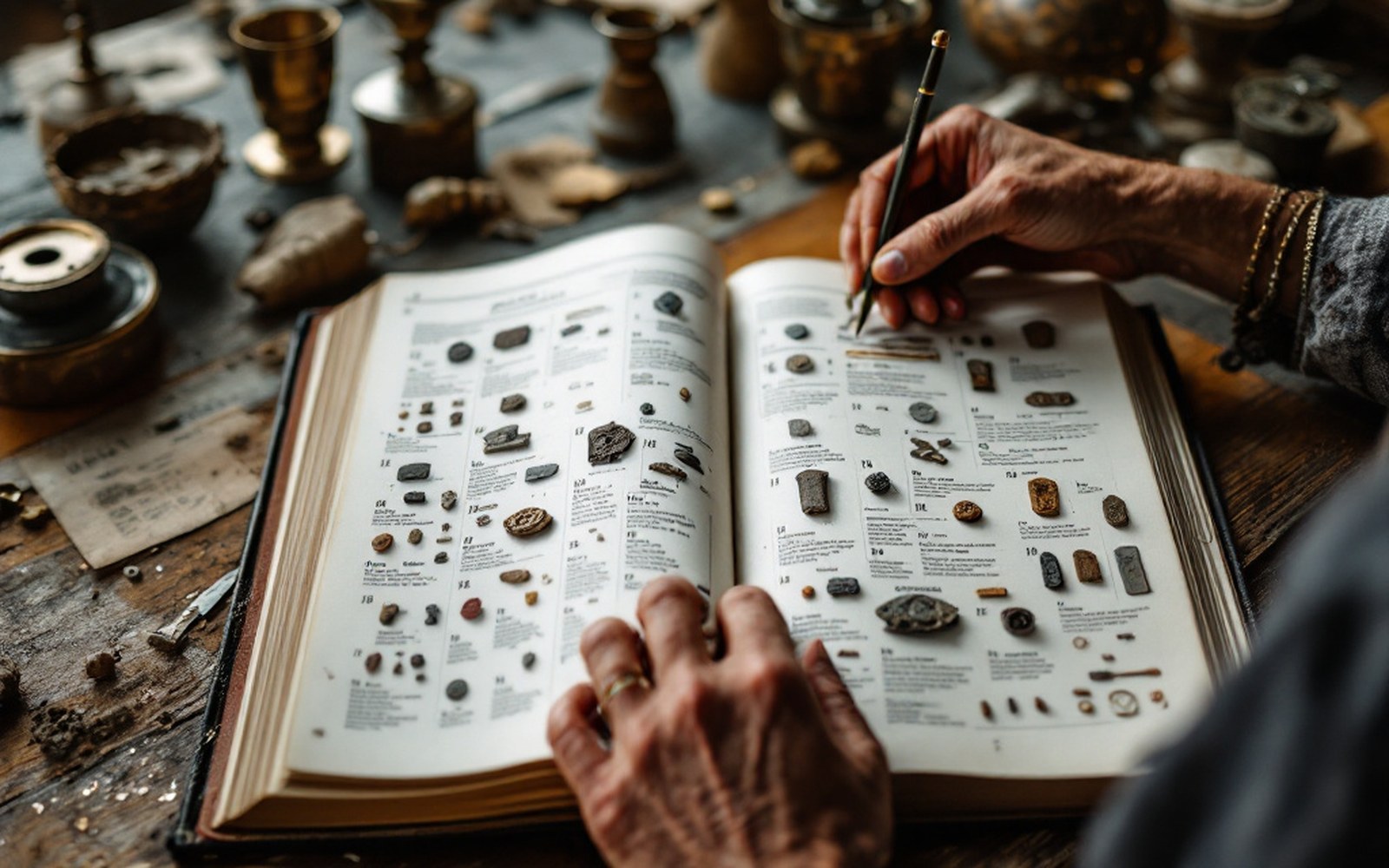
John Marshall's excavation report, published in 1931, presented the finds in full, with plates and inventory numbers that allowed later researchers to track individual objects through collections. That report is where the Indus material entered the organised scholarly record, and its publication transformed what had been local rumour and amateur curiosity into a documented civilisation. The figure with bent arms appears in Marshall's plates as a matter of inventory, neither singled out nor minimised.
Four thousand years in the ground
The chronology is worth holding in mind. The mature phase of the Indus Valley Civilisation is dated approximately 2600 to 1900 BCE. Mohenjo-daro flourished within that span and was abandoned, for reasons still debated — climate shift, river migration, internal disruption — sometime in the early second millennium BCE. The city went under silt and silence.
By the time Alexander of Macedon passed through the region in the fourth century BCE, there was nothing visible. By the time the Mauryan Empire consolidated the subcontinent, it was a mound. Four thousand years elapsed between the city's abandonment and the moment Banerji's team put the first systematic trench into the earth.
The figure on those seals, then, predates the Sanskrit word svastika by perhaps two thousand years. It predates the Vedic literature in which the mark is called auspicious, predates the Jain formulation of the four gatis and the Buddhist use of the mark on buddhapada slabs, predates the Greek Geometric period pottery that would carry the same form around the rim of Attic vessels.
None of those later traditions can claim continuity with Mohenjo-daro — the cultural chain is broken and the connection, if any exists, cannot be demonstrated. The Indus mark is its own thing, in its own context, waiting for a text that may never come.
What can be said is that the form appears to be among those shapes that human cultures arrive at independently: a figure generated naturally when a cross is given directional motion, legible as rotation or movement, stable enough to reproduce consistently and distinctive enough to function as a mark. Its presence in a third-millennium urban civilisation is not surprising; its specific meaning in that civilisation is simply inaccessible.
The objects now
The seals from Mohenjo-daro are held across several institutions. The National Museum in New Delhi and the National Museum of Pakistan in Karachi both hold substantial portions of the excavation material, which was divided at partition in 1947 following the conventions applied to other shared archaeological collections. The British Museum holds a number of Indus seals in its South Asia collection, acquired through the excavations.
The Ashmolean Museum in Oxford, which has its own holdings from Aurel Stein's surveys in the region, provides additional comparative material. The British Museum's collection of Indus seals is searchable online and allows the individual pieces — inventory number, dimensions, motif, findspot — to be examined by anyone with an internet connection.
Those inventory records are where the figure survives in its oldest documented form: a small incised mark on a piece of fired stone, pressed into clay in a city whose language we cannot read, whose gods we cannot name, and whose cosmology we can only infer from forms that outlasted every word.