Mohenjo-daro
Marshall's Report, 1931
The excavation report is where the material entered the scholarly record, with plates, find-spots and measurements.
The excavation report is where the material entered the scholarly record, with plates, find-spots and measurements.
The book that fixed the evidence
John Marshall's Mohenjo-daro and the Indus Civilisation, published in three volumes in 1931, is the document that placed the Indus Valley seals into the scholarly record with the precision a physical find demands: grid references, stratigraphy, measurements in millimetres, and photographic plates sharp enough to read the incised lines.
Marshall had directed the Archaeological Survey of India since 1902, and the Mohenjo-daro excavations — begun in 1922 under R. D. Banerji and expanded under Ernest Mackay — produced finds on a scale that required exactly this kind of systematic treatment. The report was the instrument by which a buried city became evidence.
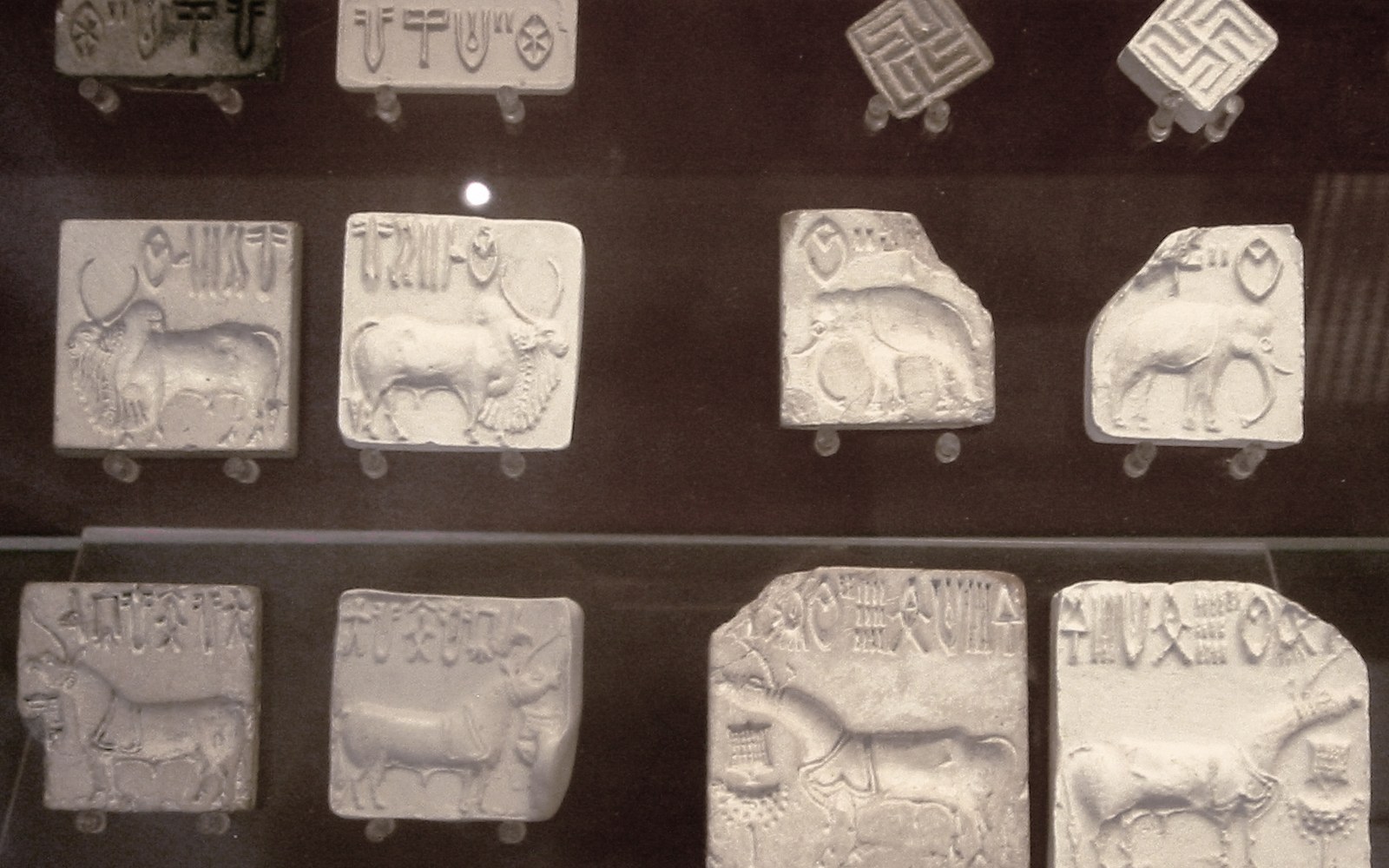
The swastika appears in that report not once but across dozens of entries. Marshall and his contributors catalogued it on steatite seals, on pottery, and on small faience and terracotta objects recovered from the mound at Mohenjo-daro, Sindh. Each entry carries its find-spot by excavation block and stratum, placing the mark in the third millennium BCE.
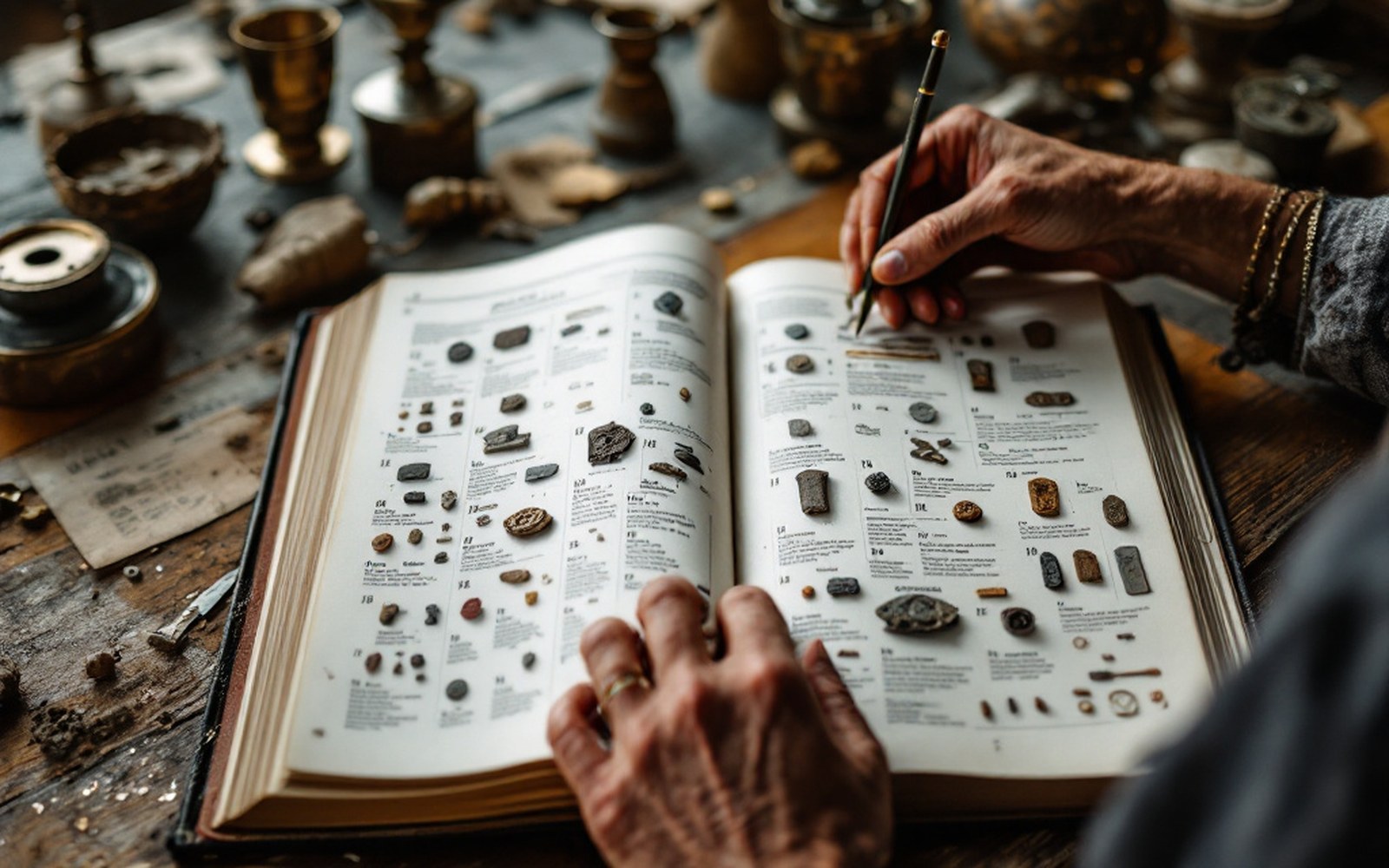
The photographic plates in Volume III show the objects at scale, so a reader can see the incised arms, measure their proportion, and compare one example against another without handling the originals. This is what separates a report from an announcement: the evidence is transferable.
Steatite, the soft soapstone worked by Indus craftsmen and then fired to a white hardness, is the medium for the finest seals in the report. Marshall's plates show that the swastika on these objects is cut with the same controlled incision as the as-yet-undeciphered script that accompanies the animal motifs — bull, unicorn, rhinoceros — on the same surfaces.
Whether the swastika functioned as a sign within that script or as a separate decorative and possibly auspicious mark, the report honestly does not resolve. Marshall records what is there; he does not impose a reading the material cannot support.
Ernest Mackay's contributions to the volumes — and his own later publication, Further Excavations at Mohenjo-daro (1938) — extended the findlist and refined the stratigraphy. Mackay documented the mark at Harappa and other sites as well, establishing that the figure was not a local habit of one site but a feature distributed across the civilisation's urban centres. That distribution is an archaeological argument in itself: a mark appearing consistently at cities separated by hundreds of kilometres, over a span of centuries, is not accidental ornament.
The 1931 report also drew on Aurel Stein's surface surveys of sites across the wider region, which provided geographical context for the urban finds. Stein's fieldwork had covered terrain from Baluchistan into Sindh, and his survey notes, folded into the broader scholarly conversation the Marshall volumes opened, helped situate Mohenjo-daro within a landscape rather than treating it as an isolated dig.
What the report could not do — and did not claim to do — was establish what the mark meant to the people who made and used these objects. That interpretive gap is still there.
Scholars working from the report have compared the Indus seals to those from contemporaneous Mesopotamian sites, noted the swastika's absence from some categories of object and presence on others, and built arguments about function and significance that remain contested. The mark sits in the record as a fact. The 1931 volumes are the reason it sits there legibly, with measurements and plates and find-spots that any researcher can return to.
The original objects — seals and pottery and small amulets catalogued in those pages — are held across several institutions, including the National Museum in New Delhi and the collections that received material through the Archaeological Survey of India. The volumes themselves are in major research libraries worldwide, and the plates have been reproduced in every serious survey of Indus civilisation since.