The four gatis
The Four Gatis
In Jain teaching the four arms stand for the four states into which a soul may be born, which makes the figure a diagram of doctrine.
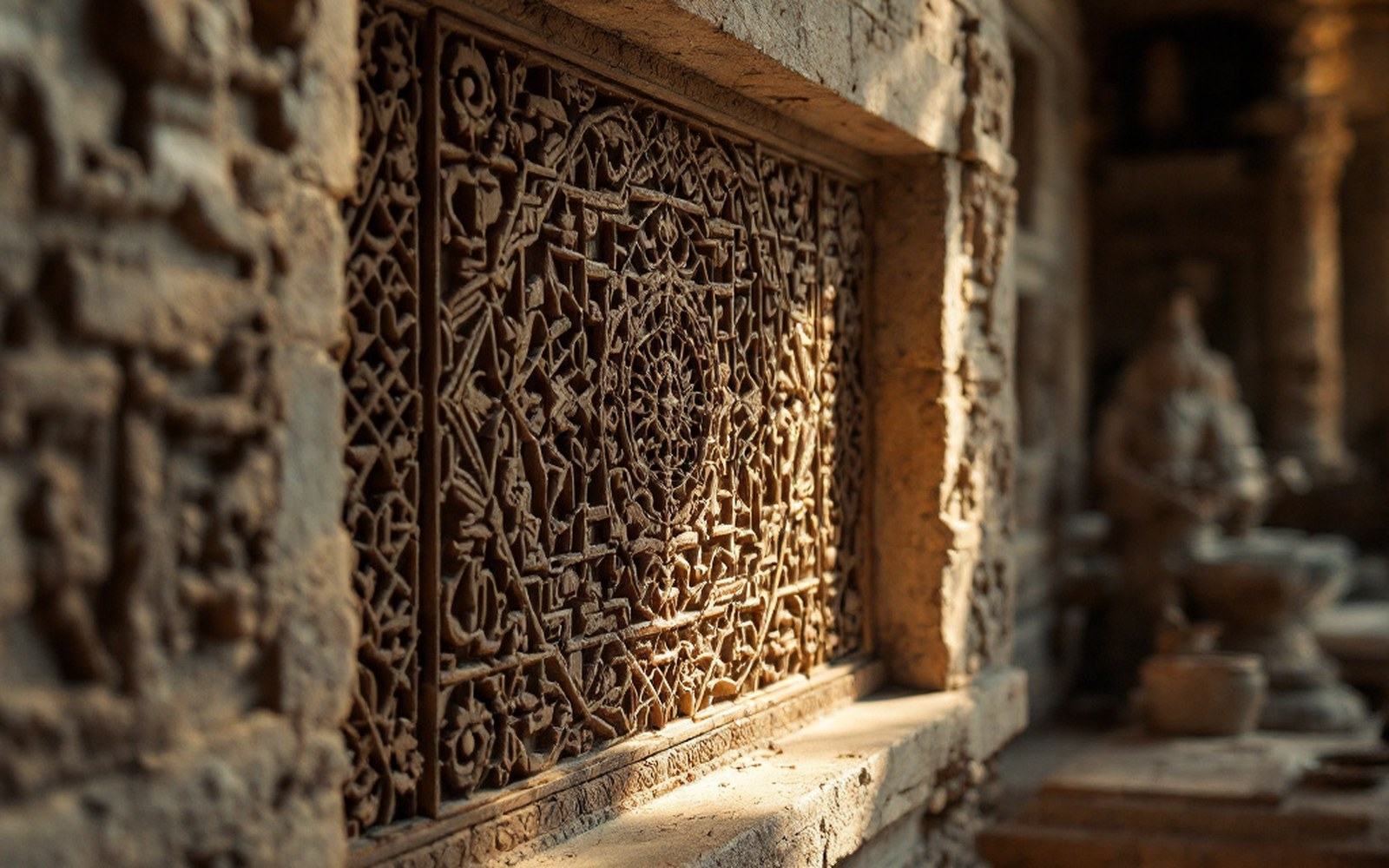
In Jain teaching the four arms stand for the four states into which a soul may be born, which makes the figure a diagram of doctrine.
A diagram drawn in four directions
In Jain cosmology every soul — jīva — is in motion, passing from one life to the next according to the weight of karma it carries. The destinations are finite: there are exactly four of them, called gatis (from Sanskrit, meaning "going" or "state of existence"), and they account for every possible birth in the universe. Gods, hell-beings, animals, and humans — all existence falls into one of these four categories, and a soul has likely inhabited each of them across the vast stretch of Jain time.
When craftsmen carved or inlaid the mark that Western scholarship later called the swastika onto a Jain votive tablet, a manuscript page, or the sole of a sculpted foot, they were not decorating. They were diagramming: each arm of the figure pointed toward one of the four gatis, and the whole shape described the wheel of transmigration in a single stroke.
The logic is remarkably clean. The mark has four arms of equal length, radiating outward from a centre, each bending at a right angle. If you assign one arm to each gati — the divine realm, the infernal realm, the animal world (including insects and plants), and the human world — the figure becomes a map of samsāra, the cycle of conditioned existence, built from nothing more than perpendicular lines.
The centre, where the arms meet, is the soul itself: bound, moving, passing from arm to arm across lives. No other geometric mark does the same conceptual work so economically, which is almost certainly why Jain teachers adopted it and why it persisted in Jain visual culture across two and a half millennia.
What the gatis mean, one by one
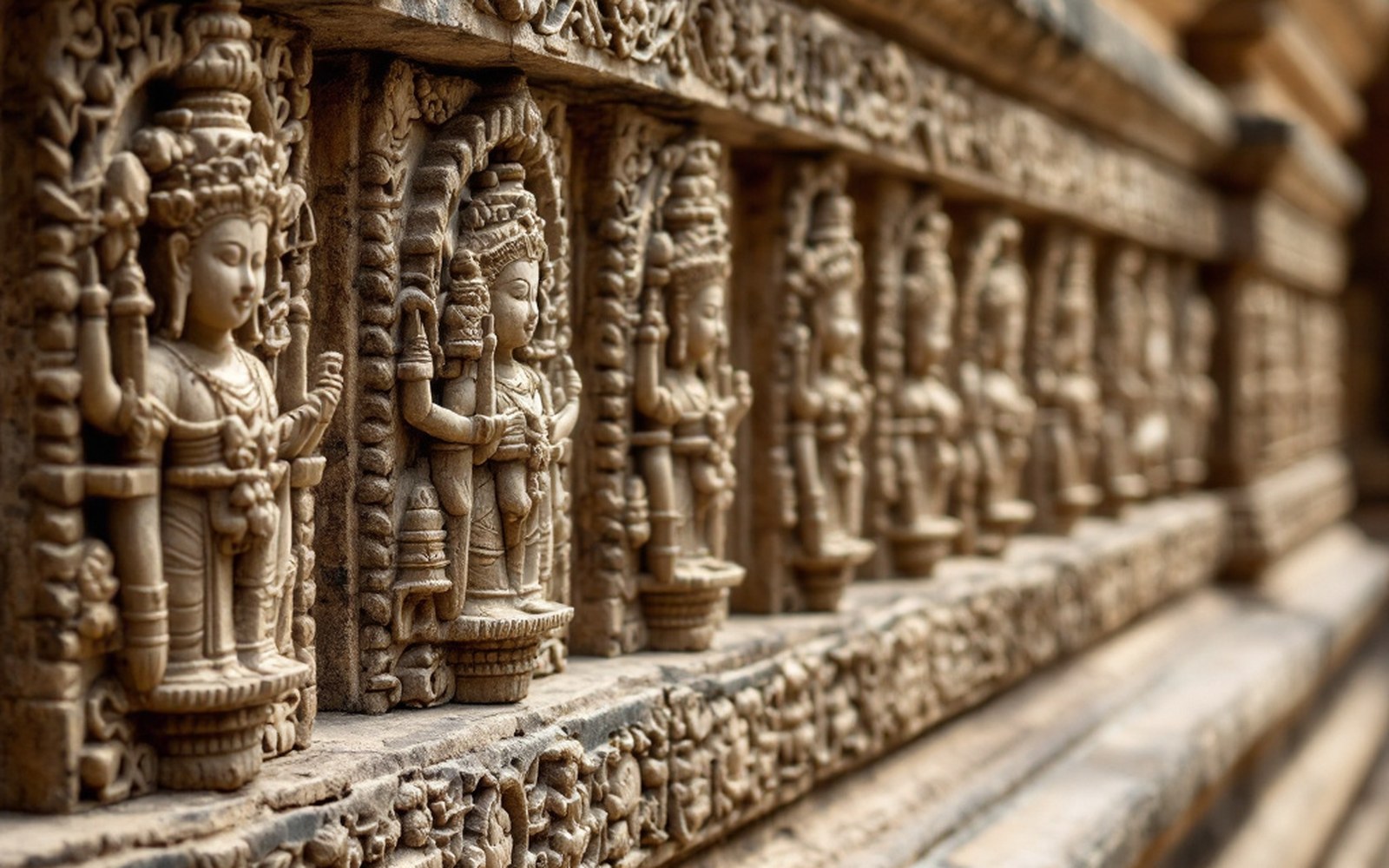
The deva-gati, the divine state, is the destination of souls that have accumulated merit through correct conduct without yet achieving liberation. Gods in Jain teaching are not omniscient and are not free from karma; they are simply in a fortunate state, whose pleasures eventually exhaust themselves. The soul born as a god will die again. The naraka-gati, the infernal state, awaits those whose karma is heavily burdened by violence, deceit, or cruelty. Jain cosmology elaborates this into multiple tiers of hell, each colder or hotter than the last, populated in detail by Jain canonical literature — but the gati itself is simply the category: downward, constrained, painful.
The tiryañc-gati covers everything that is neither god nor hell-being nor human: animals, birds, fish, microorganisms, and the plant kingdom. Jain teaching recognises organisms with as few as one sense (the sense of touch alone, attributed to earth, water, fire, air, and plants) as living beings possessing a soul, so this arm of the figure is the most populous of the four by an enormous margin. The manuṣya-gati, the human state, is the only one from which moksha — liberation, the exit from the cycle altogether — is possible. It is, doctrinally, the most precious of the four, even though it is not the most pleasant. The asymmetry is deliberate: Jain teaching insists that the rarity and difficulty of human birth is precisely what makes it the sole opportunity for final release.
The figure draws all four without hierarchy. Each arm is the same length, each bend is the same angle, and the eye moves around the shape without a natural stopping point. The rotation implied by the stepped arms — the sense that the figure is turning — mirrors exactly the rotation of the soul through the gatis: there is no top and no bottom, no arm that is structurally privileged over the others. Doctrine is built into the geometry.
The sculpture at Mathura and the manuscripts at Patan
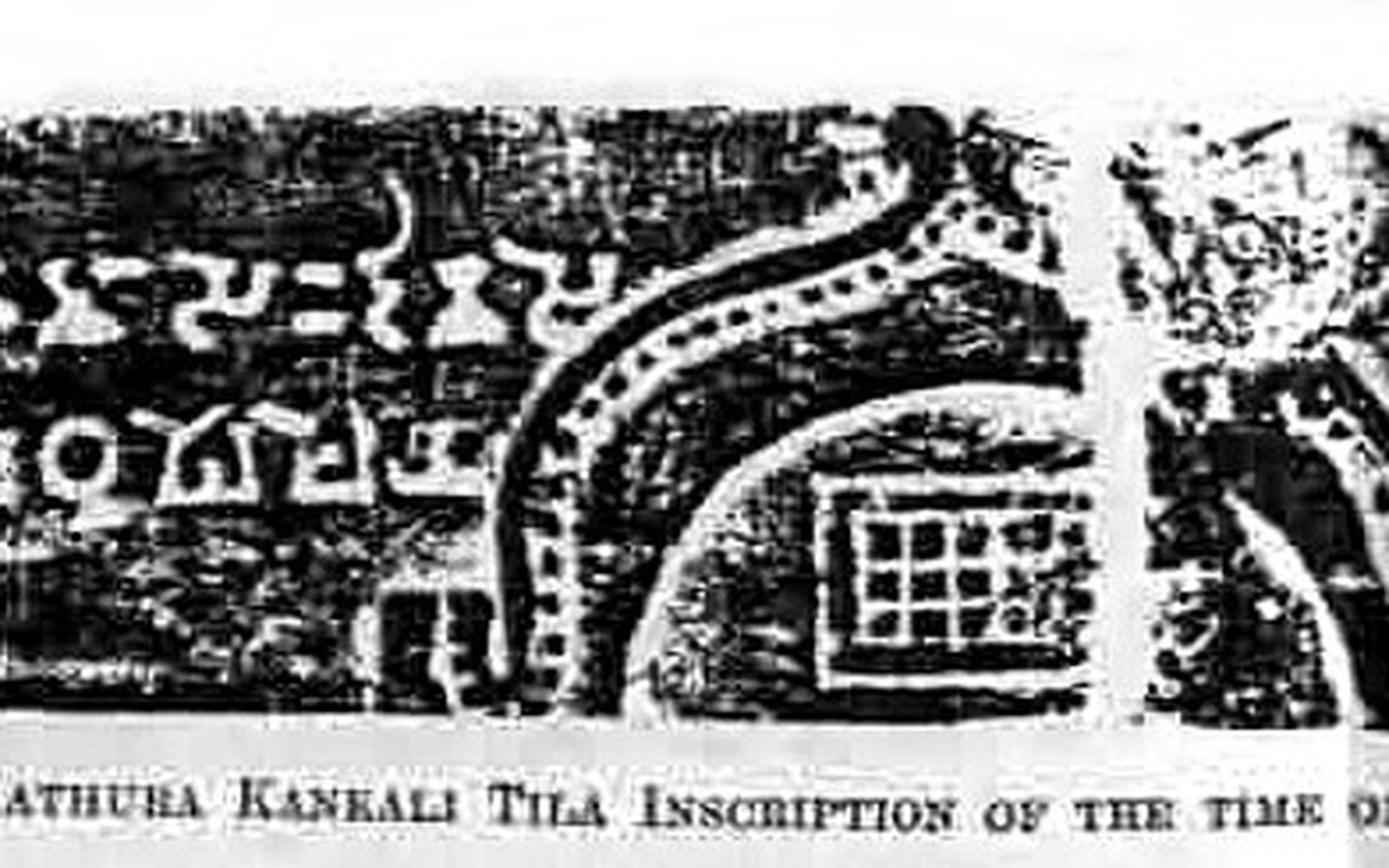
The site of Kankali Tila in Mathura, Uttar Pradesh, produced a substantial body of Jain sculpture during Archaeological Survey of India excavations in the late nineteenth and early twentieth centuries, much of it now distributed between the Lucknow State Museum and the Victoria and Albert Museum in London. Among the votive tablets and āyāgapaṭas — ceremonial offering slabs — recovered from the site, the mark appears repeatedly, sometimes as a standalone emblem, sometimes as one element within a larger auspicious programme.
The Mathura material is among the earliest dated Jain use of the mark in a clearly doctrinal context, with pieces attributed to the Kushan period running from roughly the first to the third century CE. The Victoria and Albert Museum's South Asian collection includes several Kankali Tila pieces in which the figure is carved in relief alongside other Jain emblems, each element in the composition carrying a specific doctrinal or cosmological reference.
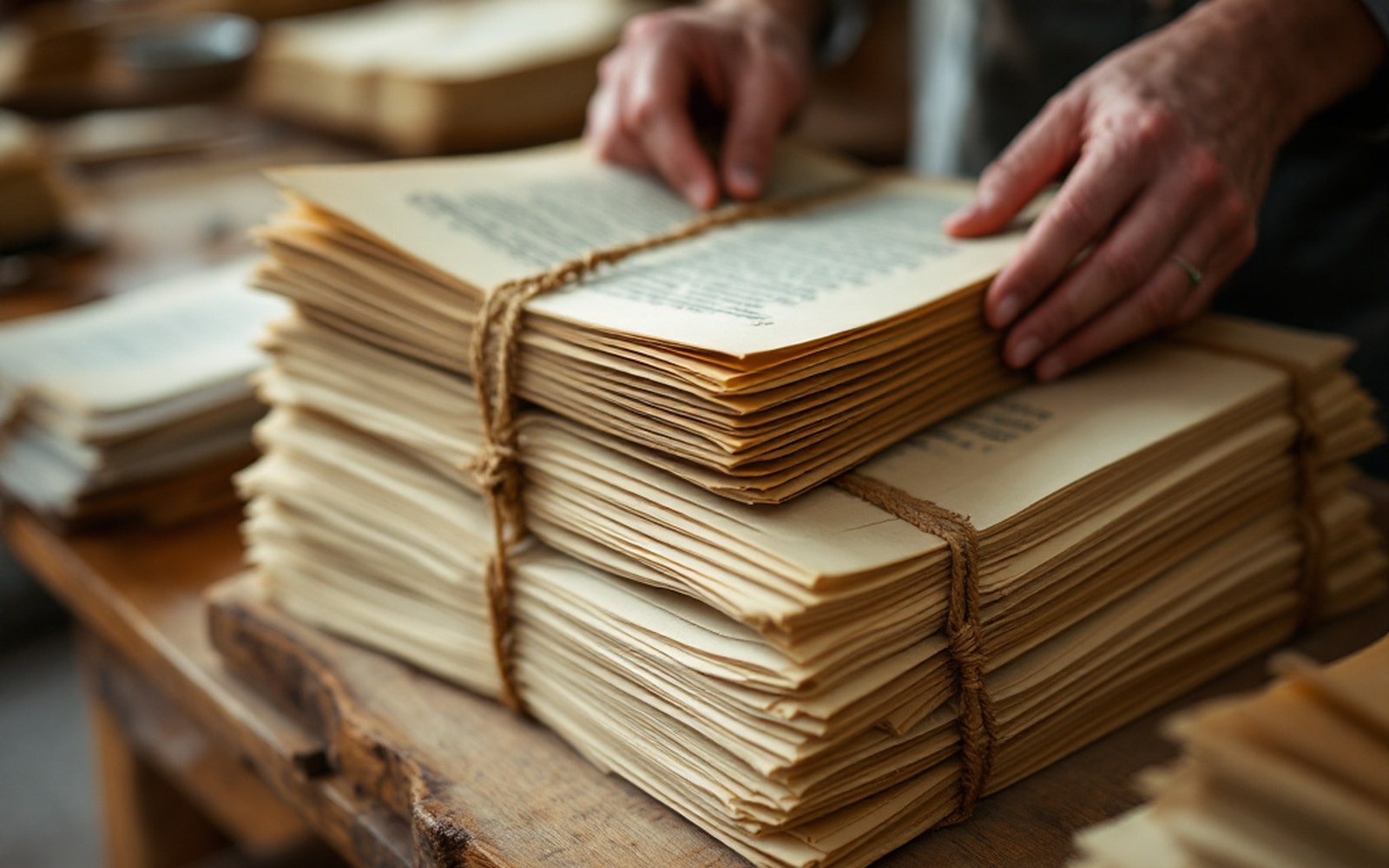
The manuscript tradition at Patan, Gujarat, shows the mark at the head of texts, drawn or inlaid in gold on palm-leaf manuscripts — a practice that placed it at the threshold of sacred knowledge. In Jain manuscript production, the opening leaf was a statement of what the book was: auspicious in the household sense, yes, but also cosmologically grounded.
A scribe who drew the four-armed figure before the first line of a canonical text was invoking not luck in any vague sense but the entire structure of existence within which the teaching had its meaning. The Jain manuscript libraries of Patan, recognised among the finest in India, preserve hundreds of examples, and the UNESCO Memory of the World register entry for the Patan Jain manuscripts acknowledges this tradition as a coherent documentary heritage stretching back at least to the eleventh century CE.
Ashtamangala: the mark within a set
Jain use of the figure rarely exists in isolation. It commonly appears as one of the ashtamangala — the eight auspicious things — a set whose other members vary slightly between the Digambara and Śvetāmbara sects but typically include a svastika, a śrīvatsa (a specific chest mark), a nandāvarta (an elaborate step pattern), a powder jar, a mirror, a full vessel, a pair of fish, and a fan. The eight auspicious things form a visual grammar: no single item in the set carries its full meaning without the others, and the set as a whole maps the qualities of a liberated being or the conditions of an auspicious event.
The svastika within the ashtamangala is explicitly linked to the four gatis through commentary tradition, which means its doctrinal reading is not a modern scholarly inference but a statement preserved in Jain textual sources. When a Jain ritual specialist arranges the ashtamangala on a worship tray before a ceremony, each object is placed with intention, and the four-armed mark is placed as a cosmological figure, not merely a decorative one.
What survives from Kankali Tila, from the manuscript libraries of Patan, and from Jain temple floors across Gujarat and Rajasthan is a continuous record of a mark being used with precision. The four arms were never merely ornamental and never merely lucky. They named four things: the four places a soul may go. The figure held that teaching across every medium — stone, palm leaf, rice flour, inlaid metal — because the teaching itself required no embellishment. The geometry was already complete.