The word
The Ledger Opened at Diwali
A new account book is marked before the first entry of the financial year, which makes the mark a business custom as much as a devotional one.

When the first entry of a new account book is made, it is not made in an empty space — the page is marked first, and only then does commerce begin.
A Custom That Is Also a Rite
In the trading communities of western and northern India, the financial year has long turned not on a calendar fixed by government but on Diwali, the festival of lights that falls in autumn. The day within the Diwali cluster set aside for this purpose is usually the day of Lakshmi puja, the main day of Diwali, though some communities begin on Dhanteras, two days earlier — the ritual honouring of Lakshmi, goddess of wealth and good fortune.
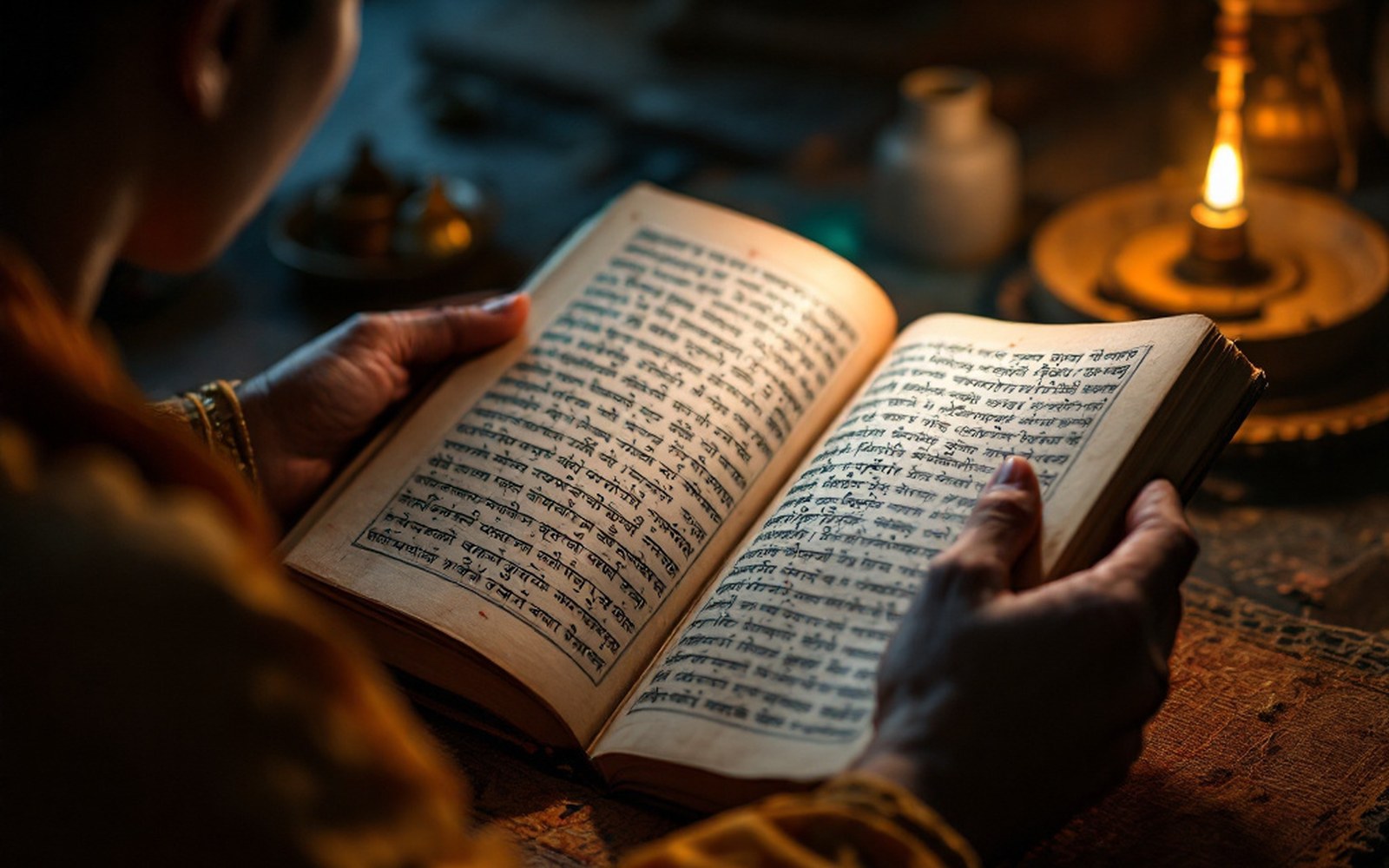
On that day, a merchant or family business opens a fresh set of accounts: a bound ledger known by the Gujarati and Rajasthani term chopda, meaning the account book itself. Before a single figure is entered, the first page receives the mark.
It appears at the head of the page, sometimes in red ink, sometimes in turmeric-tinted paste applied by the writer's own hand. A brief Sanskrit invocation accompanies it — Shri Ganeshaya Namah, honouring Ganesha, remover of obstacles, or Shubh Labh, the phrase meaning auspicious gain. Between those words, or directly beneath the invocation and above the ruled columns, sits the mark: two pairs of arms meeting at a centre, the whole figure pointing the eye outward in four directions. The financial record that follows is thus opened under the same sign that guards a household threshold or a temple doorway.
The logic is not decorative. Within the Sanskrit tradition, su-asti-ka is formed from su (well, good) and asti (it is), making it roughly "that which is conducive to wellbeing." Applying it to a ledger is not a metaphor stretched from religious use — it is the same claim made in a different room. The account book is a site of consequence, and the mark announces that whatever is written in it proceeds under an auspicious condition. Lakshmi herself, in her iconographic form as patroness of material prosperity, is invoked in the same breath; the two are part of a single gesture.
The Chopda Puja and Its Objects
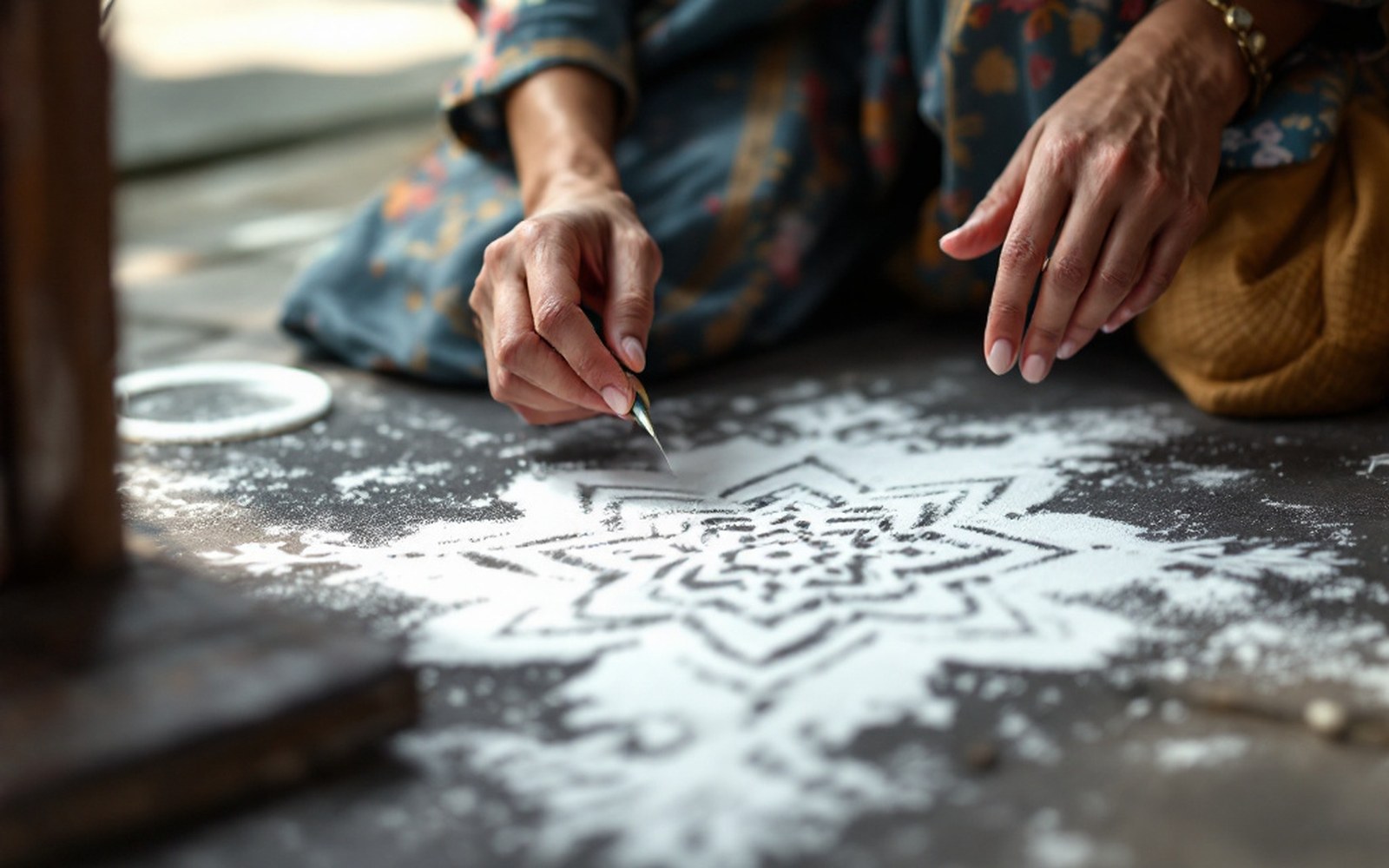
The ceremony around the new ledger is known as chopda puja, and in Marwari and Gujarati merchant traditions it carries considerable weight. The older volumes — the ledgers of the year now closed — are also present, stacked and garlanded, because they too contain the record of a year conducted under the mark and deserve to be honoured at its close. The new book is placed before a small image or printed picture of Lakshmi and Ganesha, and a priest or senior member of the household performs a brief ritual before the book is opened. Then the mark is drawn, the invocation written, and the first entry made.
The physical objects produced by this custom are of genuine interest to material historians. Bound chopda volumes from Rajasthani and Gujarati merchants of the eighteenth and nineteenth centuries survive in private family archives and in regional collections. Their opening pages show considerable variation in how the mark is rendered — some bold and confident, drawn in a single motion; others careful, almost architectural, with arms of equal length.
The British Museum's collection of South Asian manuscripts and documents includes commercial papers from this period that illustrate how consistently the mark anchors the opening page across different trading families and generations.
What the custom makes plain is that the separation between the devotional and the commercial was not, in these traditions, a meaningful one. A ledger is not a secular object that borrows a religious symbol for luck.
It is an object that participates in the same ordered world that the mark describes: one in which beginning something well — at the right time, in the right manner, under the right sign — shapes what the thing becomes. The Sanskrit etymology of the word itself points in exactly this direction: not a wish, not a prayer, but a statement that wellbeing is present.
Diwali as a financial new year remains in use among many business communities. The chopda puja is still performed, the mark still drawn. What a historian of material culture observes is a custom documented across several centuries, stable in its form, explicit in its meaning, and continuous with the older household and temple uses from which it was never really separate.