The seal
The Mark on the Chest
In East Asian iconography it sits on the chest of the figure, understood as a seal of the heart-mind.
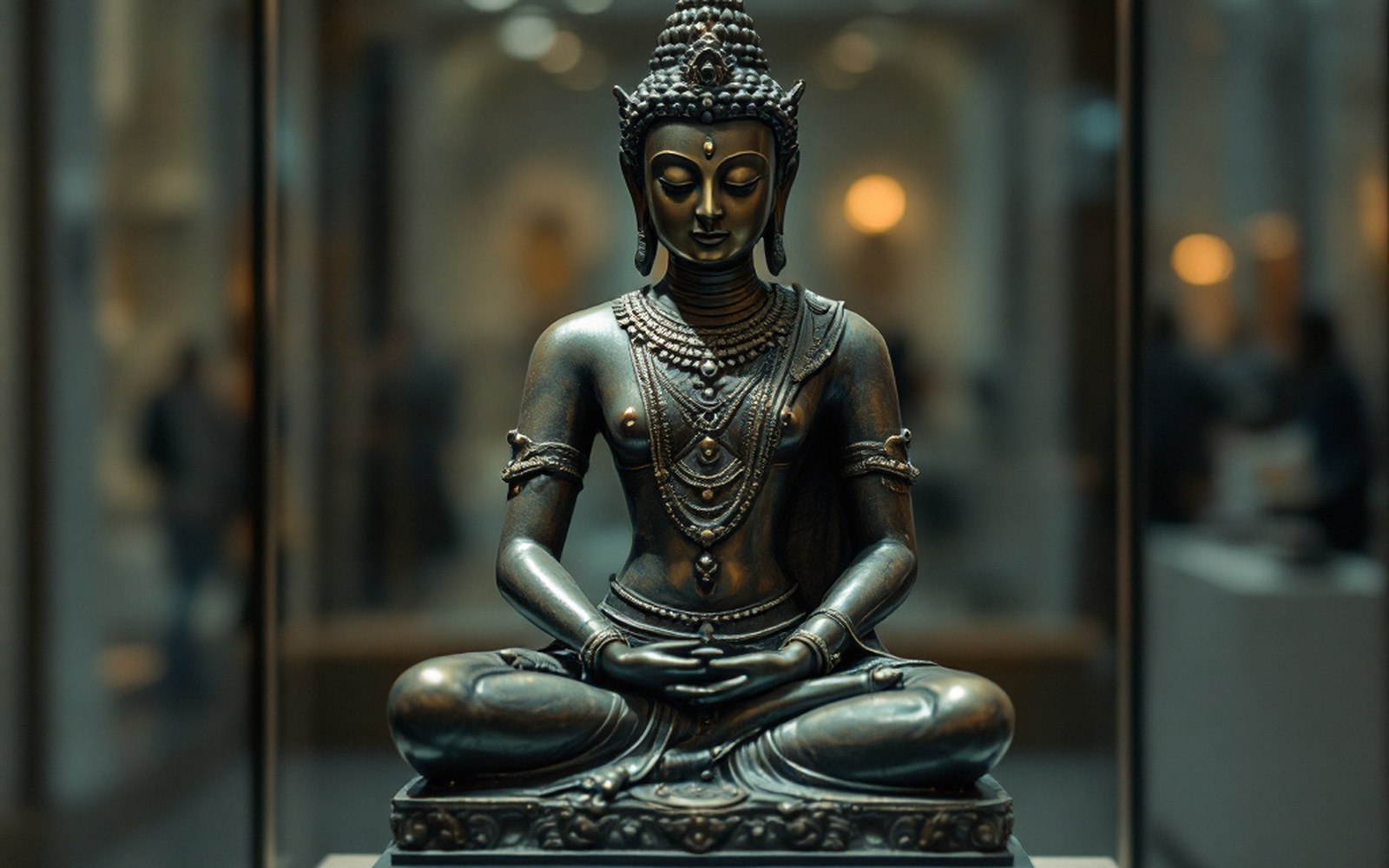
In East Asian Buddhist iconography, the figure carries it not as ornament but as a seal pressed into the very place of awakening.
A Location That Speaks
When a sculptor in Tang-dynasty China placed a mark on the chest of a gilded bronze Amitābha, the choice of site was deliberate. The chest, in the cosmology shared across East Asian Buddhism, is the locus of the kokoro in Japanese or xin in Chinese — the heart-mind, the seat at once of feeling and cognition. A mark set there is not decorative; it is locative. It identifies what the figure is, from the inside out.
The form used is almost always the left-facing variant — arms turning counterclockwise — though workshop practice varied and regional traditions were not uniform.
The term most commonly applied in Sanskrit contexts is svastika, but East Asian texts and craftsmen worked within their own lexical frames: Chinese canonical writings transliterate the form or describe it as wan (卍 or 卐), a character that came to carry its own phonetic weight and eventually entered the Chinese writing system as a recognized graph. Its meaning in that frame clusters around the ideas of ten thousand, of auspiciousness in abundance, and of the heart's boundless virtue.
The Chest as Site of Transmission

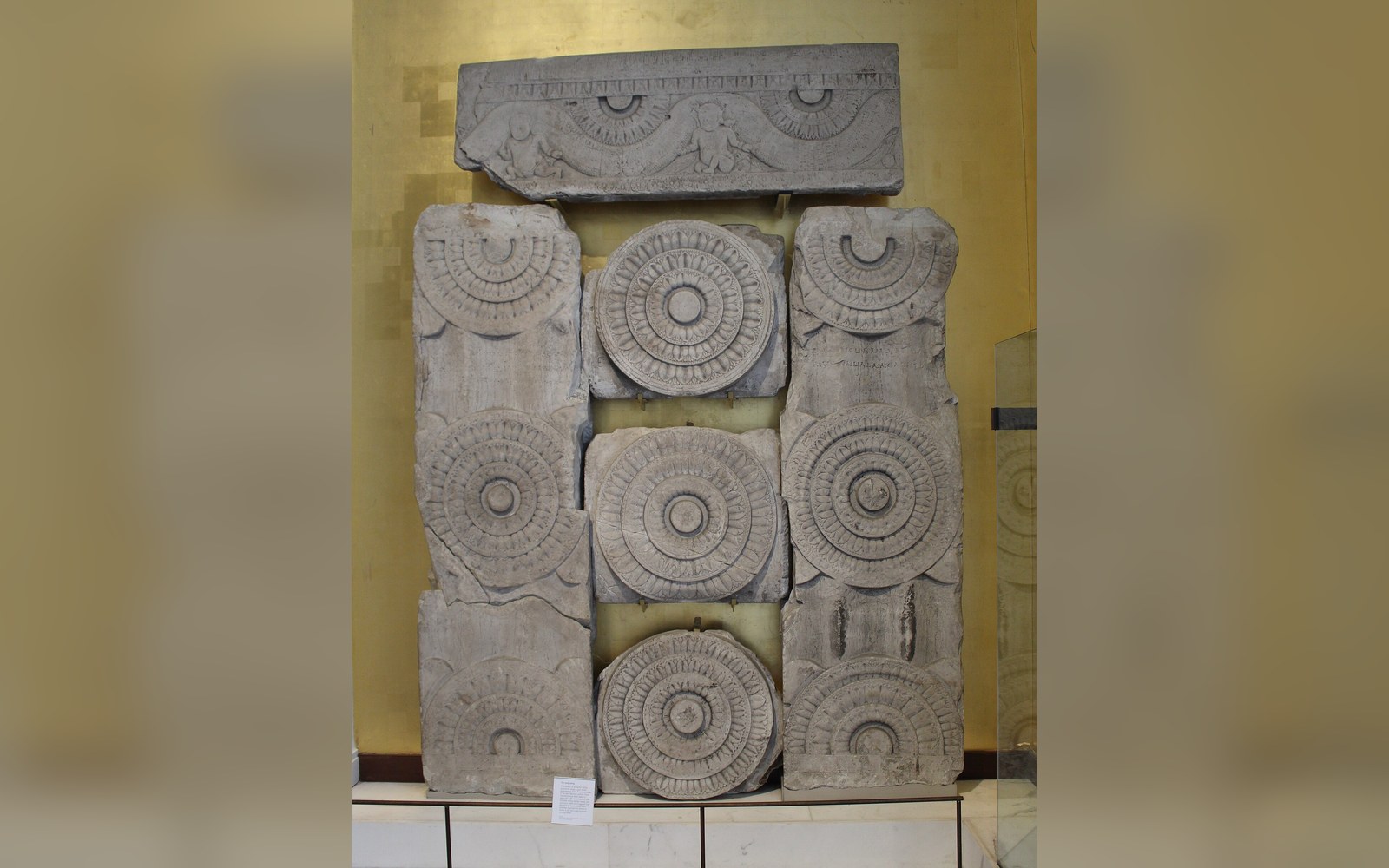
The decision to place the mark at the chest rather than beneath the feet or on a throne base shifts its register entirely. Marks on the soles of the Buddha's feet carved at Amaravati belong to a tradition of inscribed footprints — the body read as a surface impressed by contact with the ground.
The chest mark operates differently: it radiates outward. When a worshipper faces a painted or cast figure in a temple hall, the mark sits at eye level, at the body's center, oriented toward the viewer. In this sense it functions as something closer to a seal of authentication — not decorating the figure but attesting to its nature.
Tang and Song dynasty sculptures in the collections of the Museum of Fine Arts Boston show the mark inlaid, incised, or painted at this position across a range of Buddhist figures, including Amitābha, Vairocana, and Guanyin in certain manifestations. The consistency of placement across centuries and workshops points to a canonical instruction rather than an aesthetic convention.
The Mahāvyutpatti, a ninth-century Sanskrit–Tibetan lexical compendium compiled in Tibet, lists the mark among the thirty-two major characteristics of a great being, the mahāpuruṣa-lakṣaṇa, though the canonical sources do not unanimously agree on which characteristic number it corresponds to — a sign that commentary traditions handled the list differently.
Japan, Korea and the Cartographic Afterlife
In Japanese Buddhist temples, the figure's chest mark persists through the Nara period into the Heian and Kamakura sculptural traditions, rendered by busshi — specialist sculptor-monks — whose workshops in cities such as Nara and Kyoto produced the canonical image types that still stand in temple halls. The mark in this context is traced directly as the manji (卍), a term in current use in Japanese Buddhist studies for the left-facing form.
The connection between the chest mark and the cartographic symbol used on Japanese survey maps to indicate a temple is not coincidental. The Geographical Survey Institute of Japan adopted the form for that purpose precisely because it was already the widely recognized emblem of the Buddhist institution — a transposition from the figure's chest to the map's surface, carrying the same identification function.
What the Craftsman Did
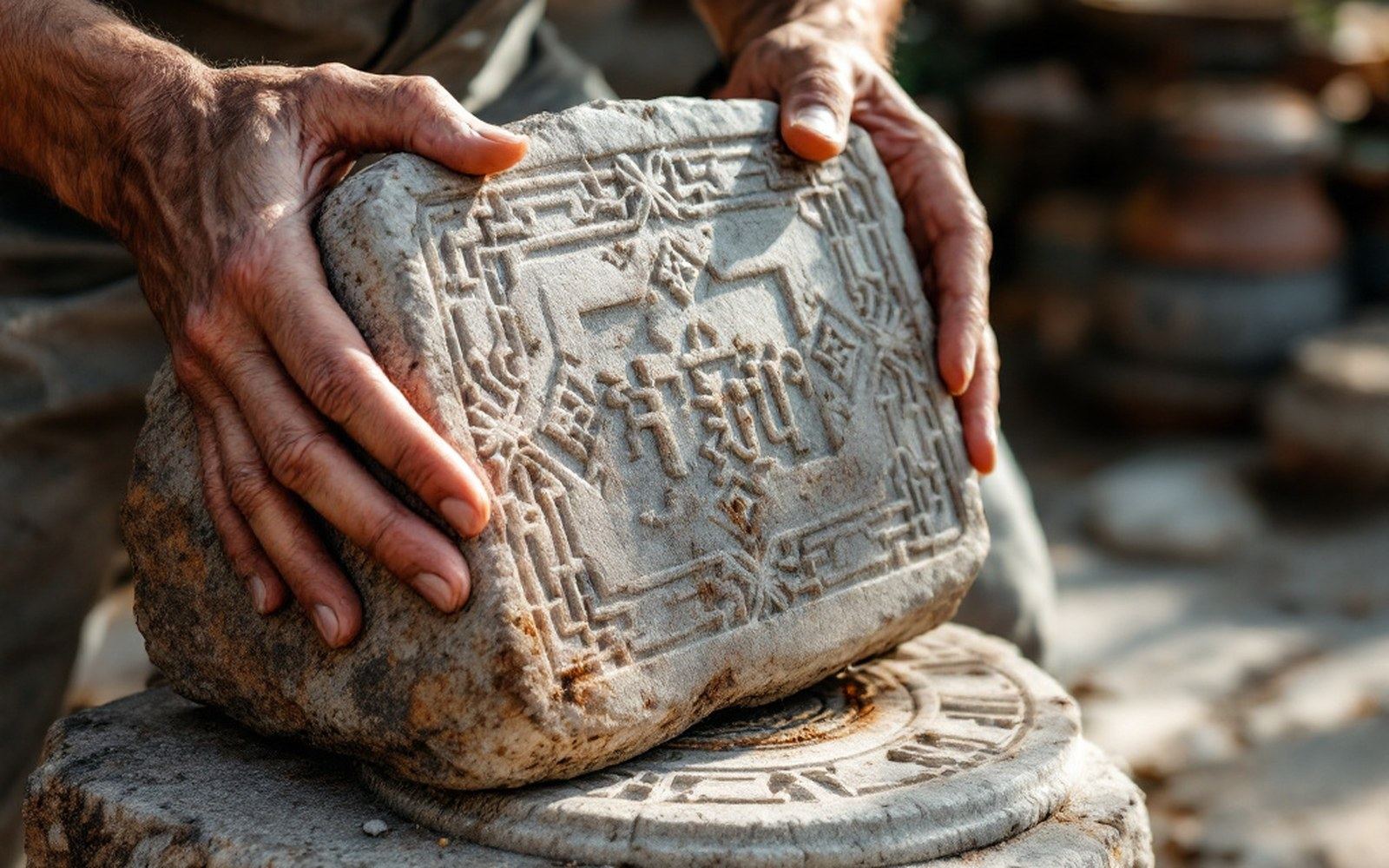
What unites the Tang bronze-caster, the Nara busshi and the Korean gilt-wood sculptor is a shared understanding that a figure without the mark on its chest is an incomplete representation of the type. The mark is not added; it is confirmed. The craftsman who omitted it was not making an aesthetic decision — he was making a doctrinal one.
That specificity of intention is what separates the chest mark from the broader decorative vocabulary of auspicious signs in which the eight auspicious things circulate: those are a set, variable in medium and context. The chest mark is singular and fixed, tied to a body, oriented toward a viewer, pressed there like a seal that says: this is the heart, and the heart is this.