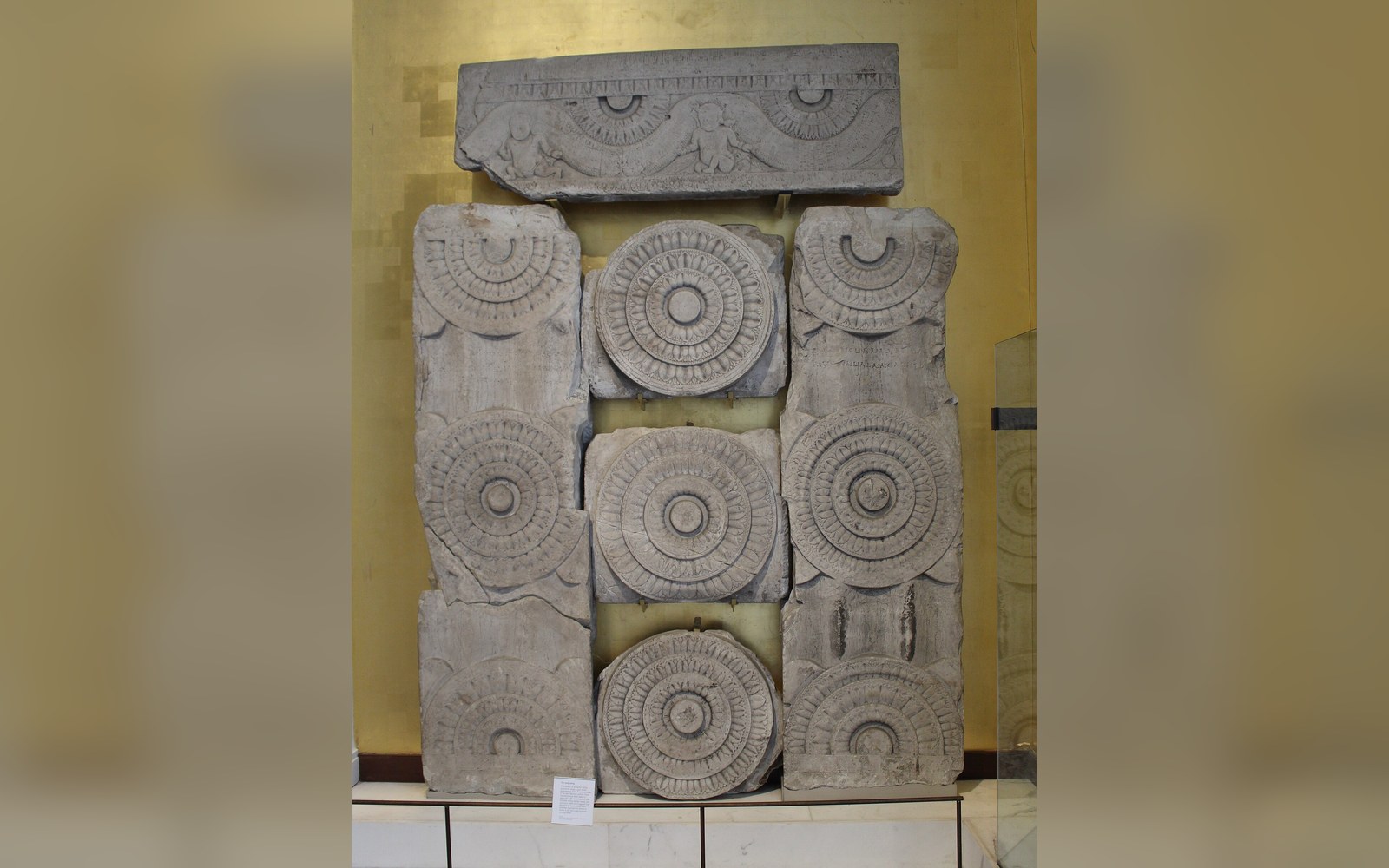
The seal
Yungdrung, Tibet
The Bon tradition uses the same shape turned the other way, with its own name and its own sense of permanence.
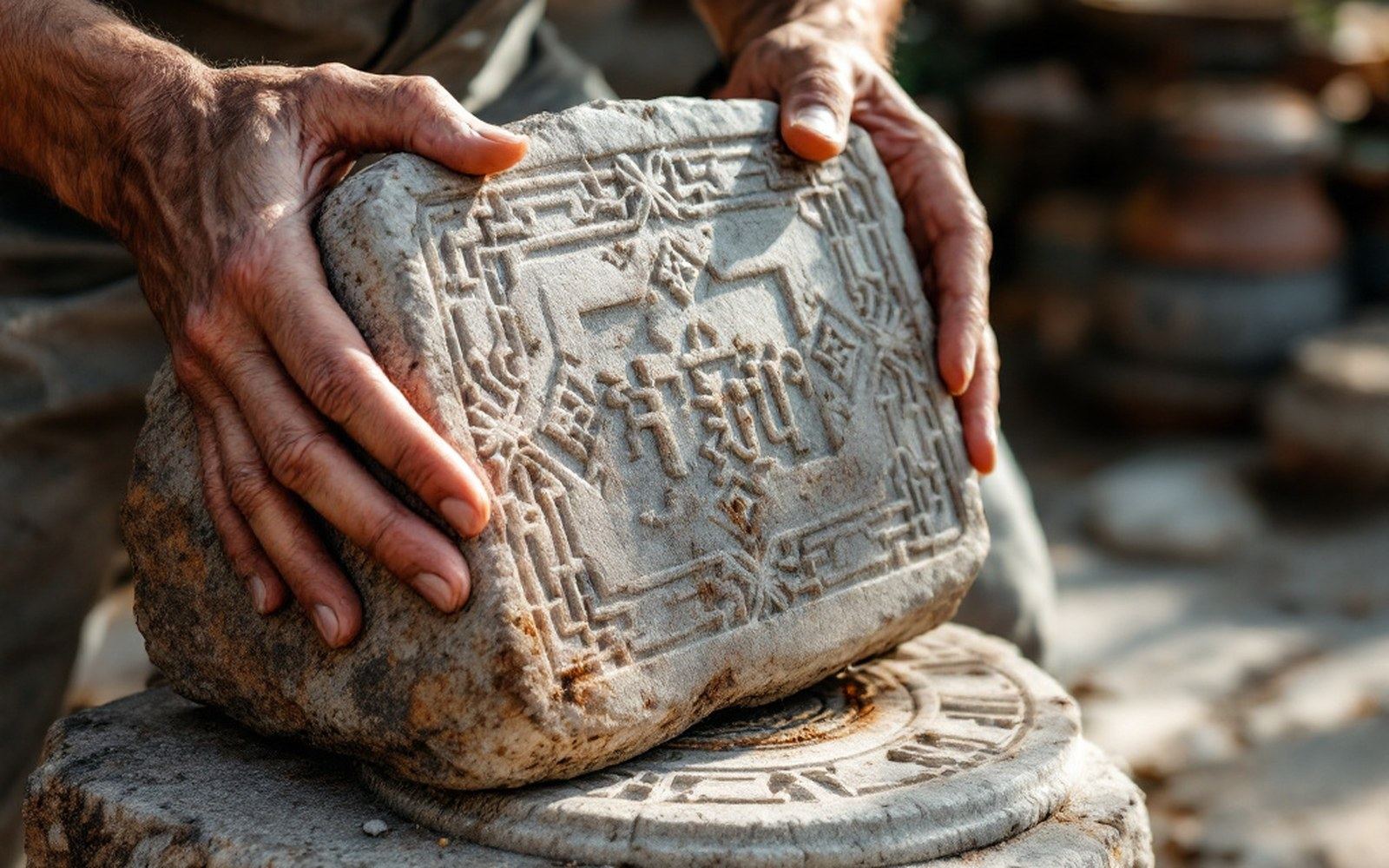
The Bon tradition uses the same shape turned the other way, with its own name and its own sense of permanence.
The shape that holds the sky
In the Bon tradition of Tibet, the mark appears mirror-reversed from its Hindu and Buddhist counterparts — arms turning counterclockwise — and carries its own name: yungdrung, a Tibetan word meaning indestructible or eternal. Where Indian traditions read the clockwise form as the sun's motion and the spread of auspicious energy outward, Bon practitioners orient theirs in the opposite direction without any sense of deficiency. The reversal is not a negation; it expresses the same core meaning — permanence, that which cannot be destroyed — through a figure the tradition has always held as its own.
Bon is Tibet's pre-Buddhist indigenous religion, and though it absorbed considerable Buddhist influence over centuries, it maintained a distinct cosmology and a distinct visual vocabulary. The yungdrung sits at the centre of that vocabulary.
It appears on monastery walls, on ritual objects, on thangka paintings, and woven into textiles, and in each context it functions as a sign of the indestructible ground of existence — what Bon teaching calls the unborn and unceasing nature of reality. The Bön tradition is documented in the collections of the British Museum, which holds ritual objects and painted works from Tibetan religious practice.
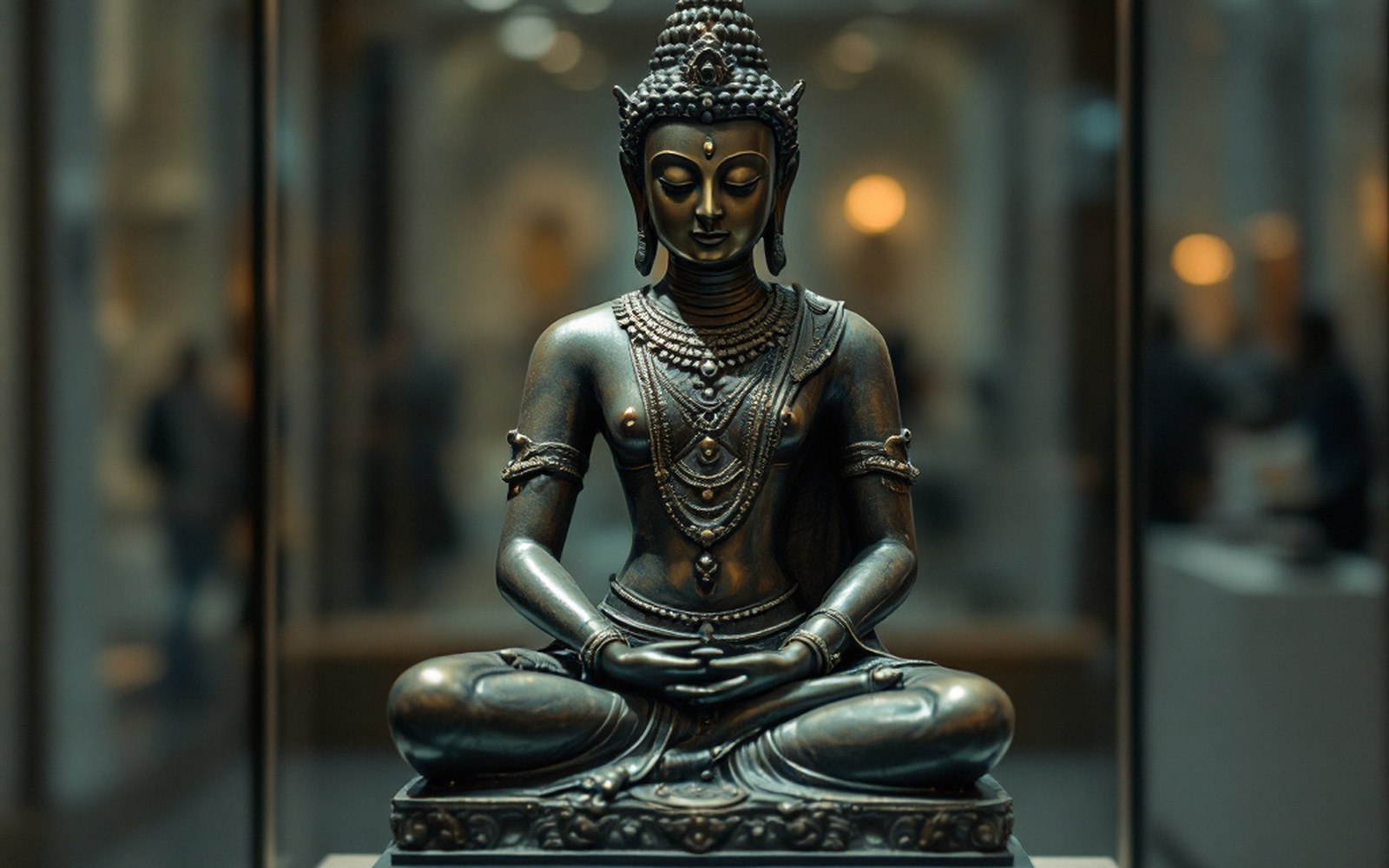
The term yungdrung also names Bon's own equivalent of the Buddhist swastika-bearing footprint: the Yungdrung Bon — literally "eternal Bon" — is the name the tradition gives itself when it wishes to emphasise its antiquity and permanence. The shape and the tradition's self-designation are inseparable; the mark is the claim to unbroken continuity.
Scholars working from Bon texts preserved in monastic and library collections and from fieldwork in Tibetan communities have traced the figure's consistent use across several centuries of Bon manuscript and monastic art.
Unlike the Indus Valley seals excavated by John Marshall and Ernest Mackay at Mohenjo-daro, where the mark's meaning must be inferred from material context alone, the yungdrung comes with an unbroken textual tradition that names it, defines it, and locates it within a living theology. That is rare, and it makes the Bon case one of the clearest available records of what practitioners themselves understood the shape to mean: not luck, not decoration, but the sign of what endures.